
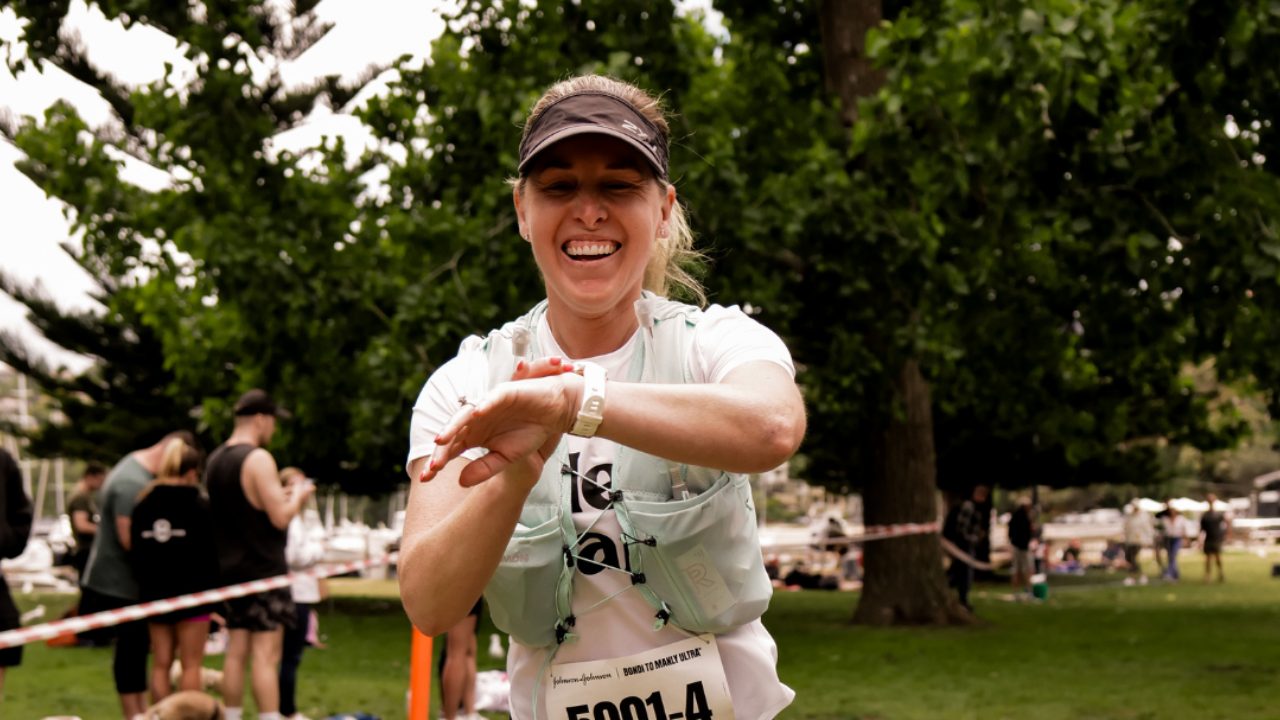
Your First Race Doesn't Have to Be an Ultra
Trail Notes | Your First Trail Race
a 10km is not the warm up round
Your First Race Doesn't
Have to Be an Ultra.
Look through most trail running content for newer runners and the assumption is the same: your first trail race is a 50km, or a 100km.
If your goal is a 10km, or anything under a half marathon, that can quietly suggest your race is the warm up round. It is not. It is a real goal in its own right.
A first trail 10km asks questions most of us have not answered yet: uneven ground, elevation change, pacing on climbs and descending without wrecking our quads for the last third. None of that is trivial just because the number is smaller than 50.
Trail Note · 01
What Actually Changes at This Distance
Ultra training is largely about time on feet and fuelling logistics. At shorter trail distances, the terrain does more of the work. The climbs, the footing and the descents are the main event.
A steep, technical 10km can take longer and feel harder than a flat road half marathon. Trail finishing times are not directly comparable to road times for this reason. Judge your race by the course, not by your road pace.
Ankles are where uneven ground tends to find us. In a 2 year study of 51 young elite trail runners aged 15 to 22, ankles made up 49.5% of all injuries recorded, ahead of knees at 17.9% and lower legs at 9.5%. For the women in the study, ankles were still 36% of injuries.
Those athletes were young and elite, so read the numbers as a pattern rather than a prediction for you. The pattern points to the ground rather than the distance, which is why terrain practice belongs in a first trail build alongside your base running, not after it. If you do roll an ankle, our guide to what to do next covers the first days and the return to running.
3 things that matter more than mileage here
Getting comfortable on uneven and undulating terrain before race day.
Building a long run that reflects race terrain rather than just race distance.
Practising the climbs and descents specifically, since technique on both saves more energy than fitness alone at this distance.
Starting with very little running behind you? Build a trail running base from zero first, then bring the terrain work in.
Trail Note · 02
Choosing the Right First Trail Race
Not every trail race under half marathon distance suits a first race equally. Vert matters more than distance. A 10km with 200m of gain is a very different day to a 10km with 600m of gain.
A course with runnable, well marked trail and moderate elevation tends to build confidence faster than the most scenic or most technical option. Check the elevation profile and course description before you enter, and run part of the course beforehand if you can. Not sure where to train? Start with finding your local trails.
Many first races sit between 10km and 30km. A 20 to 30km trail event is a complete first race too, and it is the first rung of the ladder many of us climb toward a 50km. When you are ready to look further, Your First 50km is the next read.
Time on feet, not pace, is the useful measure to train toward. A first trail 10km might take 60 to 100 minutes depending on the terrain and elevation, and that range is normal, not slow.
Final Trail Note
This Is Not a Stepping Stone You Need to Justify
Some of us at this distance are working toward an ultra eventually. Many are not, and have no interest in ever running further than this. Both are complete reasons to be here.
The Her Trails community includes runners training for their first 10km and runners training for their 5th 100km. Neither goal outranks the other in what it takes, what it teaches or what it is worth finishing.
If you would like company while you practise terrain, climbs and descents, come along to a Sunday group run. Here is what happens at a group run.
Her Trails coaching cue
If a longer distance becomes interesting later, it will still be there. It does not need to be the reason for lacing up now.
Research informing this Trail Note
Sanchez-Garcia, Penichet-Tomas, Pueo & Jimenez-Olmedo (2022), Injury Incidence and Pattern in Elite Young Male and Female Trail Runners. Applied Sciences, 12(3), 1155. A 2 year study of 51 elite trail runners aged 15 to 22.
every distance is a real distance
Written by the Her Trails coaching team
Trail Notes are evidence-informed coaching journals written for women who train, race and run on trails.
Keep going with us