
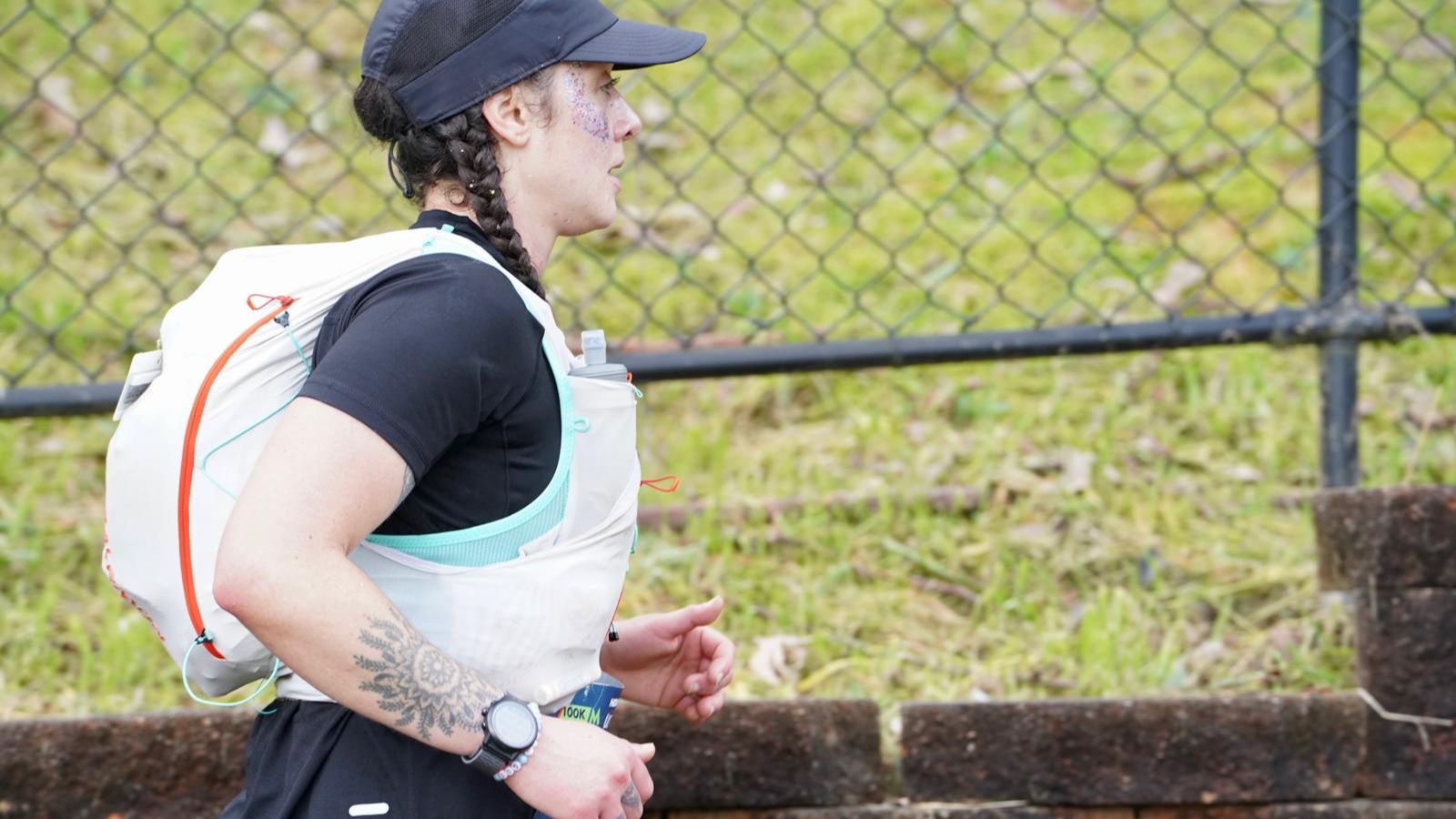
Your First 100km: A Realistic Picture
Trail Notes | Race Preparation
a realistic picture of the day ahead
Your First
100 Kilometres.
A first 100km is not twice a 50km. It is a different kind of day. Longer than time. Deeper than terrain. A conversation with the parts of yourself that only the back half of the night will introduce you to.
If you are considering your first 100km, you deserve a realistic picture before you sign up. Not to discourage you. To prepare you. The athletes who finish 100km well are almost never the ones with the most natural talent. They are the ones who arrived honestly informed and patiently trained.
This Trail Note is your orientation. What 100km actually asks of you. How to train for it. How to fuel through it. How to pace it. What changes when the night comes. What no one tells you about the long, quiet hours in the second half. And how to come out the other side stronger, not broken.
A 100km is not a longer race. It is a day-long problem-solving exercise with your own body as the variable.
You do not finish 100km because you are tough. You finish 100km because you prepared honestly and kept making good decisions long after it stopped being easy.
Trail Note · 01
What 100km actually asks
A 100km will likely keep you moving for somewhere between thirteen and twenty four hours, depending on terrain, elevation, weather and your own profile. That number alone changes the conversation. You are no longer asking how long you can hold a pace. You are asking how well you can manage yourself across a day longer than your normal day.
You will eat through hours. Drink through heat or cold. Manage feet for thousands of footstrikes. Make decisions tired. Sometimes navigate the dark. Sometimes navigate the moments where your own mind tries to convince you that stopping makes sense.
A first 100km is, more than anything, a test of decision-making across fatigue. The body matters. The plan matters. But what makes the difference between the runners who finish well and the runners who collapse is often the quality of the small decisions made when none of the decisions feel small anymore.
Trail Note · 02
The build
A 100km build is typically 20 to 28 for an athlete with a meaningful trail base. If you are coming from a 50km, you can compress. If you are coming from a marathon, you usually should not.
The build sits on consistent weekly aerobic volume, structured back-to-back weekend days that grow gradually, deliberate terrain practice, two strength sessions per week, regular deload weeks every three to four weeks, and a clear taper of two to three weeks. The longest long run usually sits between thirty five and fifty kilometres, often paired with a long second day. The point is not to rehearse 100km. It is to teach the body to absorb long days, on top of long days, without breaking down.
The most common 100km build mistake is the same as the 50km mistake, just amplified. Long runs that get heroic before the body is ready. Strength dropped when training feels busy. Recovery weeks skipped. The athlete arrives at the start line over-trained, under-recovered, slightly underfed, slightly under-slept. The day finds the gaps.
What our 20-week program actually asks of you
Her Trails 100km programs are built in 20-week blocks.
Not because it is a tidy number. Because it is the minimum honest time to prepare a body well for this distance.
Twenty weeks is enough to build real aerobic depth. To progressively introduce back-to-back long days. To develop the climbing strength, descending resilience and stair confidence that an event like UTA100 specifically demands. And to still arrive at the start line with a body that has absorbed load rather than accumulated it.
Why we encourage a 50km first
Before beginning a 100km build, we encourage athletes to have completed a 50km trail ultra.
Not as a gatekeeping rule. As a practical one.
A 50km teaches you things that no training session can replicate. How your gut behaves across five or six hours of moving. How you make decisions when you are tired. How your feet hold up. How you fuel and hydrate in actual race conditions. How you feel in the hours after crossing a finish line.
That knowledge becomes the foundation the 20-week block is built on. An athlete arriving into a 100km program without any ultra race experience is essentially learning two things at once. The 50km gives you the self-knowledge to train smarter in the block ahead.
The shape of the block
Load is structured in three-to-four week progressive cycles, each followed by a deliberate de-load week. De-loads land at Weeks 4, 8, 12 and 15. They are not optional. They are where adaptation actually happens.
Weekly volume sits roughly between six and twelve hours, depending on the phase, your individual capacity and your life outside running.
For UTA100 specifically, the long sessions are built around course demands, not just distance. That means sustained climbing. Controlled technical descents. Stair sets. Power hiking at grades over ten percent. Full mandatory gear. Race-cadence fuelling. These are not add-ons. They are the training.
Peak long sessions sit in the five-to-six hour range. This is intentional. UTA100 does not require you to prove the race distance in training. It requires you to arrive durable, fuelled and able to keep making good decisions across a very long day. Sometimes through the night.
Two streams. One program.
The program runs two pathways inside one structure.
The Finish Strong stream is built for athletes whose primary goal is a confident UTA100 finish within the cut-offs. More emphasis on hiking strength, fuelling consistency, cut-off pacing and recovery protection. Peak long session closer to five hours or 40–45km.
The Strong Performance stream is built for experienced ultra runners with a stronger base and a time goal in mind. Greater elevation exposure, more structured climb and descent simulation, longer peak sessions in the 5.5–6 hour range.
Both streams follow the same weekly theme. The difference is the load selected within that week. Neither stream is lesser. They are just honest about where each athlete is starting from.
Strength is not optional
Two strength sessions run as a consistent thread across all 20 weeks. Not dropped when the long runs get long. Not swapped for another easy run when life gets busy.
The athletes who arrive at UTA100 structurally resilient, who keep moving well on the Furber Steps at kilometre 90, are the ones who did not treat strength as an accessory during the build.
Trail Note · 03
Fuelling across the day
Fuelling does not break a 100km in one moment. It breaks it in compounding deficits. Even small under-fuelling, accumulated across hours, becomes a quiet decline that shows up as flat legs, low mood, dropping pace and rising risk.
Practical targets to work toward in training, refined for your gut. Sixty to ninety grams of carbohydrate per hour for the duration of the race. Many trained ultra athletes tolerate higher with practice. Around five hundred to seven hundred and fifty millilitres of fluid per hour, adjusted for heat. Electrolytes tested in training. Solid food, gels, chews, mash, real food, all rehearsed across long sessions.
In a 100km, simplicity is your friend. Build a rolling thirty minute fuelling rhythm. Eat something every thirty minutes from the first hour. Set a watch alarm if you forget. Aid stations supplement the plan, not replace it. By the time you feel hungry or flat, you are already behind.
Trail Note · 04
Pacing across hours
In a 100km, the first hour is almost always too fast for the rest of the day, even when it feels honest. Start at an effort you can speak in full sentences at. Hike climbs early and intentionally. Run the flats steady, never hard.
A useful pacing frame for first-time 100km runners is to treat the day in thirds. The first third is restraint. You should feel almost guilty for how easy it feels. The second third is execution. You hold your fuelling plan, manage your kit, address small problems early. The third third is where the day becomes yours. The runners who arrive at sixty five or seventy kilometres still calm, still fuelled, still eating, are the ones who can run the final stretch with strength.
In a 100km, time banked early is almost always paid back with interest later. Race the second half. Survive the first half by being patient.
Pace honestly in the first half. The 100km is won, or lost, in the kilometres after the body says enough.
Trail Note · 05
When the night comes
For most 100km races, you will run into or through the dark. Night running is its own skill. Cooler air. Slower pace. Higher tripping risk. Changes in mood. Strange visual moments where the brain plays small tricks on tired eyes. Cold creeping in faster than you expected.
Practice in training. Several long night sessions across your build are non-negotiable for a first 100km. Test your head torch, your spare batteries, your layers, your gloves. Practise eating in the dark. Practise solving small problems with cold hands.
On race night, layer up before you are cold, not after. Eat warmer foods if you can. Keep your light beam at a comfortable distance. Move at a steady, sustainable pace. Many low moments resolve themselves with food, fluid, a warm layer and forty minutes of patience.
Trail Note · 06
Crew and aid stations
A 100km is rarely run alone in its logistics. Even self-supported races involve aid stations that need to be navigated well. If your race allows crew, choose people who know you, can stay calm, can read your state and can keep you moving.
A simple aid station rhythm. Drop heart rate. Refill bottles. Eat real food if your gut allows. Address feet, kit and chafe. Reload fuel for the next section. Leave within a defined time window. A 100km can quietly haemorrhage ninety minutes across the day if aid stations are treated as picnics.
If you have pacers, brief them well. They are not there to push you. They are there to keep you eating, keep you moving and keep you mentally tethered when the long dark hours arrive.
Trail Note · 07
The mental terrain
There will be at least one moment, probably several, where the mind tells you it cannot keep going. This is one of the most predictable parts of a 100km. The honest preparation is not to avoid these moments. It is to expect them.
Almost every low patch can be addressed by the same short list. Have I eaten in the last thirty minutes? Have I drunk? Am I too cold or hot? Is something wrong with my feet, my kit, my pack? Can I downshift for twenty minutes and let the basics catch up?
Resist big decisions in low patches. The brain is unreliable when it is hungry, tired and dark. Make small decisions, walk for a stretch, eat and drink, and reassess in twenty minutes. The vast majority of low patches resolve.
Trail Note · 08
Knowing when to stop
A 100km will sometimes ask you to stop, and the wise athlete listens. Significant injury risk. Worsening symptoms that food, fluid and rest do not improve. Vomiting that will not settle. Confusion. Severely cold or hot. A medical sign your body is past managing.
Stopping in those moments is athletic maturity, not failure. A 100km is one day in a long running life. The same logic that built you for this start line will build you for the next one. Withdrawing well is part of becoming an ultrarunner.
If you do withdraw, we have written more on how to handle a DNF in another Trail Note. Read it if the day asks you to.
Trail Note · 09
After the finish line
A 100km finish line is a strange place. Euphoria. Disbelief. Sometimes flatness within hours. Often a deep exhaustion you cannot quite explain to people who did not see the day.
Recovery from a first 100km deserves serious respect. Several weeks of reduced volume. Continued strength. Real food. More sleep than feels reasonable. Walking, gently. Returning to running only when the body feels genuinely keen. The post-race flatness often peaks in the second week, not the first. Hold the door open for that, too.
Resist the urge to sign up for the next thing too quickly. The right next race comes from a settled mind, not a victorious adrenaline crash.
Trail Note · 10
The longer view
A first 100km is rarely about the time. It is about the layered, hour-by-hour evidence that you can stay calm, fuel, pace, problem-solve and keep going when the day asks more than you thought it would. That evidence stays with you. It shows up in how you raise children. How you negotiate hard work seasons. How you face medical news. How you walk into rooms you used to be intimidated by.
If you are considering signing up for your first 100km, prepare honestly. Train patiently. Surround yourself with experienced women who have walked into this distance themselves. Choose a course you respect. Choose a year that gives you time to build it carefully.
The day will be hard. The training will be long. The reward is not a medal. It is the woman you will meet, twenty hours into your own decision-making, who can still keep moving.
prepare honestly, race the woman you become
Written by the Her Trails coaching team
Trail Notes are evidence-informed coaching journals written for women who train, race and run on trails. Made to be absorbed in ten minutes and remembered for a season.
Keep going with us