Stronger Does Not Mean More: The Recovery Dose Women Need in Perimenopause
Trail Notes | Her Strength Peri Power
the dose is the discipline
Stronger Does
Not Mean More.
There is a particular kind of woman who finds it hard to do less. She is used to holding a lot. She is used to carrying on. She is used to finding capacity when others assume there is none left.
She has often built a life on discipline, responsibility and endurance. So when her body starts to feel different, her first instinct may be to add more. More training. More effort. More sessions. More intensity. More control.
But in perimenopause, stronger does not always mean more. Sometimes stronger means better dosed.
Trail Note · 01
Recovery is not separate from training
Training does not make us stronger by itself. Training provides the stimulus. Adaptation happens when the body has enough resources to respond.
That response requires sleep, protein, nervous system regulation, hormonal support, energy availability and time. During perimenopause, several of these systems can become more variable.
For some women, recovery reserve can feel smaller through perimenopause. Changing hormone levels may affect muscle repair, and symptoms such as hot flushes can fragment sleep. This does not mean women are fragile. It means recovery needs to be programmed with the same seriousness as the work.
Recovery is not a reward for hard work. It is part of how the work becomes strength.
Trail Note · 02
Why 3 sessions a week
Her Strength: Peri Power is built around 3 strength sessions per week. That choice is deliberate.
Three sessions per week is a practical dose for many women. It gives a clear, repeated strength signal. Adding a 4th session is not guaranteed to produce more benefit, and it can raise the recovery cost for women who are also running, working, parenting, navigating stress or managing disrupted sleep.
This matters because many Her Trails women are not only lifting. They are running. They are training for events. They are working. They are caring. They are carrying invisible loads. Three sessions a week gives the body a clear and repeated strength signal. But it also leaves room to absorb it.
Trail Note · 03
More is not always a better signal
It can be tempting to think that if strength is good, more strength sessions must be better. But the body does not adapt to intention. It adapts to the work it can recover from.
If a woman is lifting 4 or 5 times a week, running several times a week, sleeping poorly, under-fuelling and managing high stress, the body may not interpret that as a productive signal. It may interpret it as threat.
That can show up as persistent soreness, heavy legs, irritability, elevated resting heart rate, loss of motivation, disrupted sleep, increased cravings, joint pain or a general sense of not bouncing back. In that state, more work may not create more strength. It may simply create more load.
Signs the dose may be off
Persistent soreness or heavy legs across multiple sessions.
Elevated resting heart rate or low HRV across a week or more.
Disrupted sleep, increased cravings, lower mood.
Joint pain that does not settle with usual recovery.
A general sense of not bouncing back between sessions.
Trail Note · 04
Protein becomes part of the program
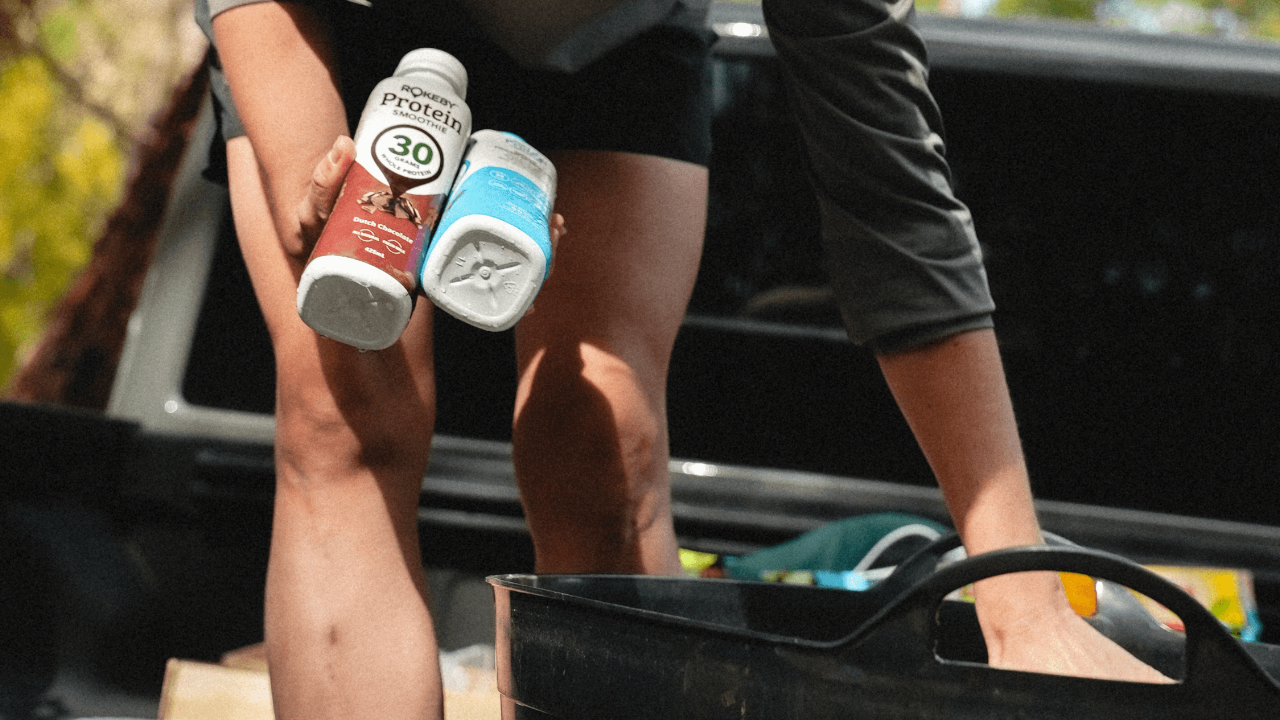
Recovery is also nutritional. As muscle becomes less responsive to the same training and protein stimulus, the amount of protein per meal becomes more important. A practical target is roughly 25 to 40 grams of protein per meal, spread across the day.
This does not need to become obsessive. But it does need to become intentional. For many women, especially active women, the issue is not a lack of effort. It is a lack of available building blocks.
You cannot build muscle out of willpower. You need stimulus. You need protein. You need enough total energy. You need sleep where possible. You need recovery between hard efforts.
Trail Note · 05
The strength of restraint
One of the most powerful skills in this stage is restraint. Not avoidance. Not fear. Not backing away from challenge. Restraint.
The ability to ask: what is the best dose for adaptation? Some days, the answer will be to lift heavy. Some days, the answer will be to rest between sets properly. Some days, the answer will be to fuel before training instead of earning food afterwards. Some days, the answer will be to separate the hardest run and the heaviest lift. Some days, the answer will be to stop adding more.
This is not weakness. It is athletic maturity.
Her Trails coaching cue
Restraint is not the same as backing off. It is the discipline to choose the dose your body can actually convert into strength.
Trail Note · 06
Why this matters for runners
For runners in perimenopause, strength training is not just an add-on. It is part of the foundation. But it has to sit intelligently beside running.
Three strength sessions can sit alongside running for many women, especially when the hardest run and heaviest lift are separated where possible, and when session order is considered on same-day training.
This is the kind of programming detail that matters. The goal is not to win the week on paper. The goal is to arrive at the end of 8 weeks stronger, steadier and more capable than when you began.
Trail Note · 07
Inside Her Strength: Peri Power
This program is not asking you to prove your worth through exhaustion. It is asking you to build.
3 strength sessions a week. Heavy compound lifts. Repeated plyometrics. 2 clear 4 week blocks. Recovery treated as part of the system. You do not need to do everything. You need to do the right things consistently enough for your body to respond.
Stronger does not mean more. Stronger means the dose is working.
3 sessions. 2 blocks. 8 weeks. A program your body can actually convert.
stronger means the dose is working
Written by the Her Trails coaching team
Trail Notes are evidence-informed coaching journals written for women who train, race and run on trails. Made to be absorbed in 10 minutes and remembered for a season.
Keep going with us