Night Running: How to Make the Dark Familiar
Trail Notes | Race-Day Strategy & Skills
when the trail goes dark
Night Running:
Make the Dark Familiar.
If your race carries you beyond sunset or starts before dawn, the trail will change while you are still moving.
The terrain does not become more technical simply because the sun disappears. Your access to visual information changes. The beam narrows what you can see, shadows change the shape of the ground and fatigue makes every decision slower.
Night running is not something to fear, but it is something to practise. The goal is to arrive at race night already knowing how your light fits, how the trail looks through its beam and how your pacing, fuelling and attention need to change.
Night running is the same trail skill in a new context.
Make the context familiar before race day and the dark becomes another part of the course, not a crisis arriving halfway through it.
Trail Note · 01
Why the same trail feels different
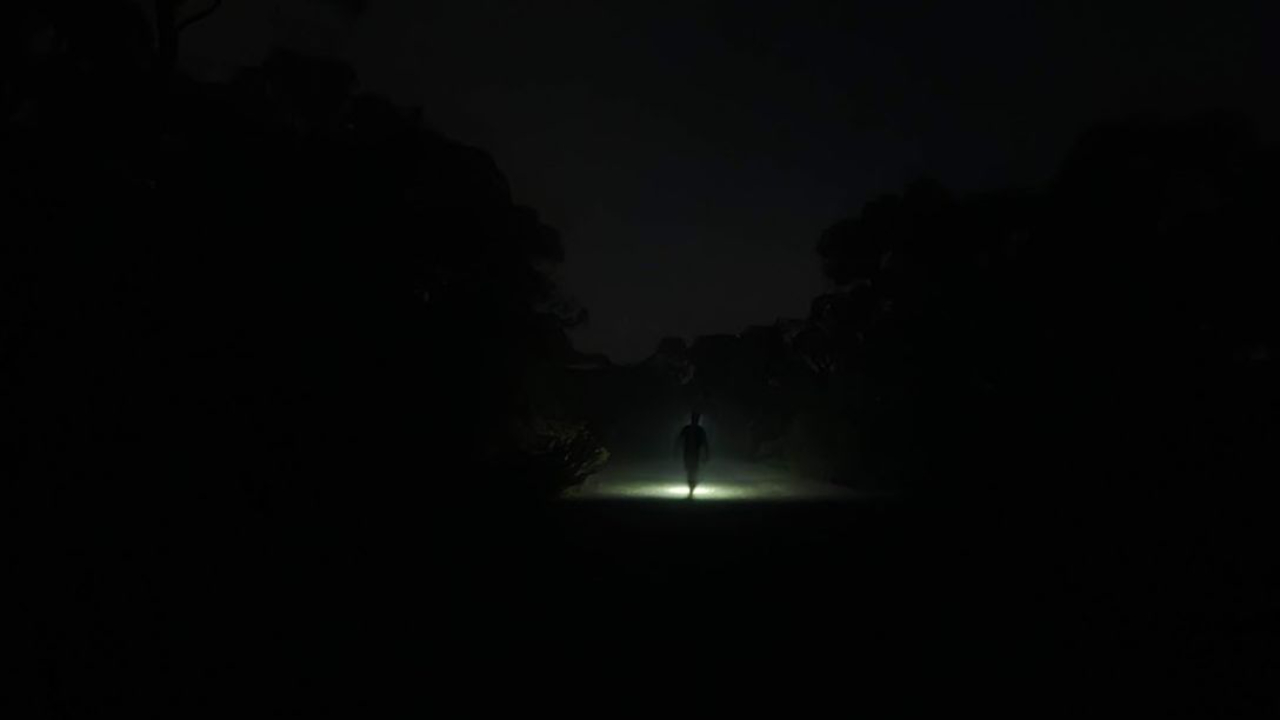
In daylight, peripheral vision helps you read the trail ahead and understand where you are in the landscape. At night, your view contracts to the area illuminated by your light. Small roots, rocks and changes in gradient can be harder to judge, particularly when the beam is flat or bouncing.
Your sense of distance can change too. Landmarks disappear, sounds feel closer and a short section can seem to continue indefinitely. If you are tired, cold or under-fuelled, that narrower world can feel mentally consuming.
Familiarity reduces the cognitive load. Once you have practised adjusting your gaze, pace and footing in the dark, less attention is spent reacting to the environment and more remains available for navigation, fuelling and decision-making.
Trail Note · 02
Choose a lighting system, not just a bright lamp
Brightness matters, but lumen count alone does not tell you how useful a light will be. Beam width, distance, stability, comfort, battery performance and the ability to operate the controls with cold or wet hands all matter.
Some Australian ultras recommend a headlamp of around 200 or 300 lumens or more, while others simply require lighting that is adequate for the course. Technical terrain may feel more comfortable with a brighter or broader beam. Your race rules are the minimum. Your tested ability to see and move safely is the real standard.
A waist or chest light can create shadows from a different angle and may improve depth perception for some runners. It is optional, and it must be tested so it does not bounce, blind other runners or complicate battery management.
Race-night lighting checklist
Check the event’s current mandatory gear list and any required lighting times.
Test your primary light on terrain similar to the race, using the brightness setting you expect to sustain.
Calculate battery time from the manufacturer’s setting-specific estimate, then add a meaningful buffer for cold, age and unexpected delays.
Carry the required backup light, batteries or power source and keep them protected from water.
Practise changing batteries and switching lights without needing to unpack your entire vest.
Trail Note · 03
Build familiarity progressively
You do not need to repeatedly sacrifice an entire night’s sleep to become competent in the dark. Begin with a short dusk session on a familiar route. Progress to a full-dark run with a trusted group or running partner, then rehearse a longer race-specific section if your event genuinely requires it.
The number of sessions matters less than what you learn from them. You are testing a system, not earning toughness points.
Progressive exposure
Start at dusk on a familiar, low-consequence trail.
Run fully in the dark with the complete race lighting system.
Practise eating, reading course markings, checking navigation and managing clothing without stopping for long.
Add technicality, duration or later timing only when it reflects your race and can be done safely.
Trail Note · 04
Plan for safety before you leave
Night training should be deliberate, not improvised. Choose a route you know, check access and weather, tell someone where you are going and when you expect to return, and carry the communication and emergency equipment appropriate to the location.
Run with others where possible, particularly while building confidence. If the route includes roads or crossings, use the visibility equipment required for that environment. A headlamp helps you see; reflective or rear-facing lighting helps others see you.
Download the route for offline use and know how to navigate if markers are missed. Darkness is not the time to discover that your watch map, phone battery or GPX file is not working as expected.
Trail Note · 05
Let effort guide the pace
There is no reliable rule that night running will cost every athlete a fixed number of minutes per kilometre. The slowdown depends on terrain, visibility, fatigue, weather, confidence and how deep into the race the darkness arrives.
Expect technical ground to require more caution. Shorten your steps, lift your gaze far enough to scan beyond the next foot placement and walk when running would add risk without adding meaningful speed.
Use your planned effort as the anchor. Heart rate may provide another data point, but fatigue, cold, caffeine and terrain can all affect it. The goal is not to defend a daylight split. It is to move efficiently enough to keep making good decisions.
Slower is not failure when slower is the pace that keeps you upright, fuelled and moving towards daylight.
Trail Note · 06
Keep eating, even when the night changes your appetite
Fatigue and cold can make food less appealing, while the monotony of sweet fuel may become harder to tolerate as the race continues. Your energy needs have not disappeared simply because your appetite has.
Practise the foods and timing you plan to use at night. Many runners appreciate a change in flavour, texture or temperature, but race-specific availability and individual tolerance should guide the plan.
If you use caffeine, test the dose and timing in training and account for what is already present in gels, drinks or tablets. More is not automatically better, and caffeine cannot make severe sleepiness safe.
Trail Note · 07
The circadian low is real, but the clock varies
During the biological night, alertness and core body temperature fall. Many runners feel their strongest dip in the hours before dawn, but there is no universal 3 am crisis. Timing is influenced by habitual sleep, chronotype, travel, race start time and how long you have already been awake.
Expect that your mood, pace and ability to solve problems may temporarily deteriorate. Break the race into smaller tasks: reach the next marker, eat the next portion, add a layer, check the route and stay connected with the people around you.
The low can pass. Dangerous sleepiness needs action.
Repeated stumbling, microsleeps, confusion, inability to navigate or hallucinations are not signs to simply push harder. Stop somewhere safe, alert event staff or your support crew and follow the race safety plan.
Trail Note · 08
Protect warmth before you feel cold
Night often brings falling temperature, wind, damp air and a slower pace. A body producing less heat can cool quickly, particularly when clothing is wet.
Carry the mandatory gear and dress for the conditions rather than the start line. Add layers before you become deeply cold, keep emergency clothing dry and remember that stopping at an aid station can cool you faster than moving.
Persistent shivering, worsening coordination, confusion or unusual behaviour may indicate a medical emergency. Seek help rather than attempting to out-run it.
Trail Note · 09
When dawn returns
There is a moment when the edge of the trail begins to return. The landscape grows wider, depth comes back and the world moves from a circle of light into colour again.
Daylight can lift mood and alertness, but it does not erase accumulated fatigue. Keep fuelling, keep checking the course and avoid spending the energy that returns all at once.
Every kilometre in the dark brought you to this light. The gear testing, the practice runs and the calm decisions made the unfamiliar manageable. You kept moving, and the landscape came back.
run well, stay safe, see you at sunrise
Written by the Her Trails coaching team
Trail Notes are evidence-informed coaching journals written for women who train, race and run on trails.
Key references and resources
Hurdiel R et al. Combined effects of sleep deprivation and strenuous exercise on cognitive performances during the North Face Ultra Trail du Mont Blanc (UTMB). J Sports Sci. 2015;33(7):670 to 674.
Guilherme LQ et al. The role of sleep on physical and cognitive performance of ultra-endurance athletes: a systematic review. J Clin Med. 2026;15(4):1398.
Lighting and equipment should always be selected against the current mandatory gear requirements of the individual event.
Keep going with us
General education only. Always follow the event’s current mandatory gear, course and safety instructions. Night training should be planned for the route, conditions and experience of the runner.