
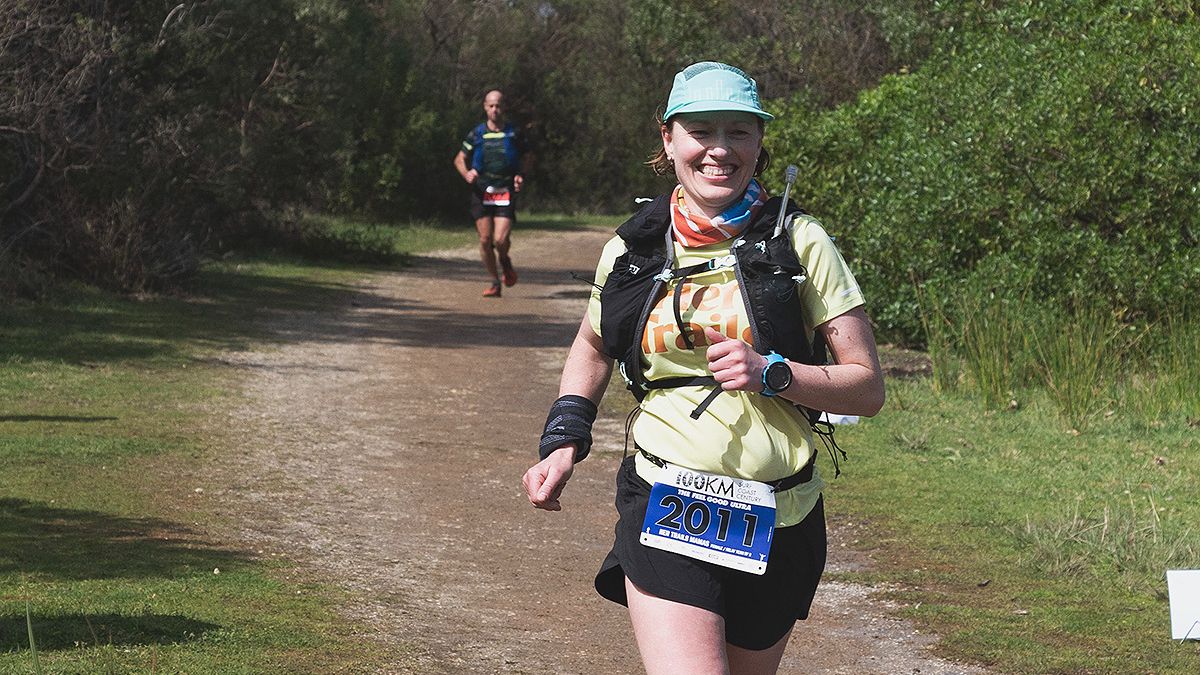
How to prepare for summer trail events & hotter race environments
Trail Notes | Race-Day Strategy & Female Physiology
How to prepare for summer trail events and hotter race environments
Heat Ready
Not Heat Hardened
Summer racing asks more from your body than fitness alone.
Heat changes the cost of everything. Your heart rate climbs earlier. Your pace may slow at the same effort. Thirst can lag behind fluid loss. Fuel can feel harder to take in. Concentration can fade. Small mistakes in pacing, hydration, sodium, clothing and cooling can become much louder over long hours on trail.
The answer is not to suffer more in training. The answer is to prepare more specifically.
For women, that preparation needs to account for physiology, not ignore it. Perimenopause symptoms, iron status, fuelling, sleep, stress load and sweat patterns can all influence how heat feels and how well your body adapts.
Heat preparation is not a toughness test. It is a system.
Train the heat. Fuel the heat. Pace the heat. Cool the heat. Recover from the heat. That is how you arrive ready, not just hopeful.
Trail Note · 01
Understand what heat changes
In cooler conditions, more of your available capacity can go toward movement. In heat, more of that capacity is redirected toward cooling. Blood is sent toward the skin. Sweat rate rises. Heart rate climbs to support both movement and temperature regulation. The same pace can become a different effort.
Humidity makes this harder because sweat does not evaporate as effectively. Direct sun, low shade, hot rock, exposed fire trails, reflective sand, still air, steep climbs and long aid-station gaps can all increase the heat cost of a race.
Heat changes the race by affecting
Effort. The same pace may feel harder, especially on climbs or exposed sections.
Heart rate. Your heart rate may drift upward even when pace stays controlled.
Hydration. Fluid losses can rise quickly, especially over long sections.
Gut comfort. Heat can make fuelling feel harder, especially if effort is too high.
Decision-making. As thermal strain rises, simple tasks like fuelling, pacing and foot placement can become easier to neglect.
On a hot course, pace is not the truth. Effort, cooling, fuelling and clarity are the truth.
Trail Note · 02
Build heat acclimatisation carefully
Heat acclimatisation is the process of teaching your body to handle heat stress more efficiently. With repeated exposure, many athletes develop lower heart rate at a given workload, lower thermal strain, earlier or more effective sweating, better plasma volume support and improved perception of effort in the heat.
The key word is repeated. One hot run is not a heat plan. A frantic week of overcooked sessions is not a heat plan either. The goal is a controlled block that creates adaptation without compromising the rest of the training.
A practical heat block
Start small. Begin with short heat exposures after easy sessions, not after your hardest workouts.
Build gradually. Many athletes use around 7 to 10 heat exposures to build adaptation, with individual adjustment based on symptoms, recovery and access.
Use the tools available. Base Runs in warm conditions, post-run sauna, post-run hot bath or controlled indoor heat can all be useful when done safely.
Protect the main training. Heat is extra stress. Add it by reducing something else, not by pretending recovery has no limit.
Maintain or refresh. Once built, heat adaptation can fade gradually, so plan maintenance exposures or a short refresh close to race day.
For many runners, post-run heat is the most practical option. You complete a Base Run, then add a controlled sauna or hot bath exposure while your body is already warm. This can create a useful stimulus without needing every run to happen in peak heat.
Her Trails coaching cue
Do not add heat to prove you can handle more. Add heat only when you can recover from it.
Trail Note · 03
The female physiology lens
Women can adapt well to heat, but female-specific research is still smaller than male-based evidence. That means the smartest approach is not a rigid protocol. It is a structured plan that listens to your response.
Some women notice patterns across the month in how heat feels, and it is worth tracking your own. We train the person, not the phase. Others notice little change. Perimenopause can add another layer through hot flushes, sleep disruption, heavier or irregular bleeding, mood changes and altered recovery.
The goal is not to train by rules written for someone else. The goal is to notice patterns. If heat sessions feel unusually punishing, shorten the dose, reduce intensity, increase recovery, move the session earlier in the day or delay the exposure.
Female-specific check-in
Am I noticing any patterns of my own, or perimenopause or menopause symptoms?
Did sleep, bleeding, mood, gut comfort or appetite change this week?
Is my heart rate higher than expected at an easy effort?
Am I recovering from heat sessions, or carrying fatigue into the next day?
Do I need more fuel, more fluid, more sodium, more shade, more rest, or a shorter exposure?
Train with your physiology, not against it. The plan works better when your body gets a say.
Trail Note · 04
Hydration starts before race week
Hydration is not a race-morning task. It is something you learn in training. The most useful starting point is to understand your own sweat rate in similar conditions to race day.
Weighing before and after a few key runs can give you a simple estimate of fluid loss. The goal is not to replace every drop perfectly during the run. The goal is to know whether you are a light sweater, heavy sweater, salty sweater, or someone whose needs change dramatically in heat, humidity or long climbs.
Sweat-rate rehearsal
Choose a warm training run that resembles race conditions.
Weigh yourself before and after, ideally with minimal clothing change.
Track how much fluid you drank during the session.
Note urine colour, thirst, headaches, cramps, gut comfort, swelling, dizziness and how you felt later.
Repeat in different conditions so you do not build a race plan from one data point.
In long hot events, drinking only plain water can be risky if fluid intake is high and sodium replacement is too low. Sodium needs vary widely, so practise with the drink mix, electrolyte product or salty foods you plan to use on race day.
Her Trails coaching cue
A hot race hydration plan should be practised, not guessed. Fluid, sodium and gut comfort need to work together.
Trail Note · 05
Fuel the heat, do not just drink through it
Heat can make fuelling harder. Blood flow is being shared between working muscles, skin cooling and digestion. If you push too hard early, the gut can become less willing to cooperate later.
This matters for women because under-fuelling is already common in endurance training. A hot race can expose that gap quickly. If you start slightly underfed, delay carbs, drink without sodium, or let nausea stop you from taking in energy, the second half can become much harder than your fitness predicted.
Hot-weather fuelling practice
Start fuel in the first 30 to 45 minutes, before the heat makes eating feel hard.
Use smaller, more frequent doses if your stomach is sensitive in heat.
Practise cold or liquid calories if solids become difficult.
Include salty foods or electrolyte support if you know you sweat heavily or crave salt.
Test caffeine carefully. Heat, higher heart rate, gut sensitivity and race nerves can change how it feels.
You cannot hydrate your way out of an energy deficit. Hot races need fuel and fluid.
Trail Note · 06
Pace the conditions, not the plan on paper
A hot day changes what sustainable means. The pace you could hold in cool conditions may become too expensive once temperature, humidity, sun exposure and terrain combine.
In summer events, early restraint is not cautious. It is strategic. The goal is to arrive at the hotter, later, more exposed parts of the course with enough fluid, fuel, focus and muscular control still available.
Hot race pacing cues
Start easier than your cool-weather ego wants to.
Hike climbs earlier to control heart rate and heat build-up.
Use shade, creek crossings, aid stations and wind exposure deliberately.
Keep eating and drinking by time, not by distance.
Let pace drop before your decision-making does.
Even pacing in heat does not mean even speed. It means even cost.
If the course gets hotter, steeper or more exposed, the pace must change so the effort can stay honest.
Trail Note · 07
Use cooling as a race skill
Cooling is not a sign that you are struggling. It is a performance tool. The earlier you use it, the more useful it can be.
Practise cooling before race day so you know what is practical for your event. Some strategies work beautifully at an aid station but are awkward on singletrack. Some feel good for 10 minutes and then create chafe. Some are only useful if your crew knows exactly what to do.
Cooling options to test
Ice in a buff, cap, neck wrap or sports bra, if comfortable and tested.
Cold fluids, ice slurries or icy poles where available and gut-tolerated.
Water over the head, neck, arms or legs when conditions allow.
Light-coloured cap, sun sleeves, sunglasses and breathable clothing.
Planned pauses in shade at aid stations if a short reset protects the next hour.
For women, cooling also needs comfort and practicality. Think about sports bra chafe, where ice sits, how wet clothing feels over hours, menstrual products, bathroom access, privacy, hair management and whether cooling strategies remain comfortable once you are moving again.
Trail Note · 08
Protect iron, recovery and the nervous system
Heat training is still training stress. It can increase sweat losses, raise recovery demand and make sleep harder if sessions are too late, too long or too close to hard training.
For women, this matters because low energy availability, heavy menstrual bleeding, low iron stores, poor sleep and high life stress can all reduce the margin you have to adapt. A heat block should not be layered onto an already depleted system without adjustment.
Before adding heat, check
Am I eating enough across the whole day?
Am I recovering from the training I already have?
Do I have a history of low iron, heavy periods, dizziness or unexplained fatigue?
Is sleep stable enough to handle another stressor?
Does this heat work replace something, or am I simply adding more?
Heat adaptation sticks better when the body has enough fuel, fluid, sodium, sleep and iron support to adapt.
Trail Note · 09
Plan the race week, not just the race day
Hot-environment events are often complicated before you even reach the start line. Travel, sleep, unfamiliar food, humidity, time-zone shifts, sunscreen, race logistics, pre-race nerves and extra walking at the event village can all add load.
Arrive early where possible. Do short, easy movement in the conditions. Keep hydration steady without over-drinking. Eat familiar foods. Prepare cooling gear and bottles before the morning rush. Reduce unnecessary sun exposure in the final 24 hours.
Race-week heat checklist
Check the forecast by temperature, humidity, wind and exposed sections, not temperature alone.
Review aid-station distances by time, not kilometres.
Pack sun protection, cooling options, spare electrolytes and enough fluid capacity for the longest section.
Prepare menstrual or perimenopause comfort items if relevant: period products, disposal bags, spare underwear, wipes, chafe balm and change of sports bra.
Decide your heat adjustment before you are swept up by start-line energy.
Trail Note · 10
Know when to stop, cool and seek help
Heat illness is not a mindset problem. It can become serious quickly, and it deserves immediate action.
If you feel faint, weak, confused, unusually chilled or hot, disoriented, unable to keep moving safely, or your symptoms are escalating despite slowing, cooling and drinking, stop and seek medical support. If someone collapses, becomes confused, stops sweating in dangerous heat, or shows altered mental state, treat it as urgent.
Heat preparation includes the humility to stop before the body is in trouble.
Strong runners respect heat. They do not negotiate with warning signs.
What to take away
Heat is trainable. Build it with repeated, controlled exposure, not random suffering.
Women need an individual lens. Your own patterns, perimenopause, iron, fuelling, sleep and life load can change how heat feels.
Hydration is personal. Practise fluid and sodium based on sweat rate, conditions and gut tolerance.
Fuel early. Heat can make eating harder, so do not wait until the gut is already under stress.
Pace the conditions. In heat, slower can be the move that keeps you racing later.
Reflection prompt
What part of my heat strategy is still a guess?
Is it pacing, hydration, sodium, fuelling, cooling, tracking my own patterns, gear, or knowing when to stop?
Train the heat, trust the system
Written by the Her Trails coaching team
Trail Notes are evidence-informed coaching journals written for women who train, race and run on trails.
Go deeper inside Her Trails
Inside Her Trails programs, we help you build the systems that sit behind hot-weather racing: effort control, fuelling, hydration, sodium, cooling, recovery and training that respects female physiology.
General education only, not medical advice. Heat training and hot-weather racing are not appropriate for everyone. Seek medical advice before heat exposure if you are pregnant, have cardiovascular, kidney, endocrine or blood-pressure concerns, have a history of heat illness, take medication that affects sweating, hydration or heart rate, or have persistent fatigue, dizziness or illness. Stop activity and seek help if heat symptoms escalate.
Selected references
Giersch GEW et al. Distinct physiological responses to heat acclimation in males and females lead to similar thermal adaptations in both sexes. Journal of Applied Physiology. 2025.
Kelly MK et al. Heat adaptation for females: a systematic review and meta-analysis of physiological adaptations and exercise performance in the heat. Sports Medicine. 2023.
Wickham KA et al. Sex differences in the physiological adaptations to heat acclimation: a state-of-the-art review. European Journal of Applied Physiology. 2020.
Giersch GEW et al. Menstrual cycle and thermoregulation during exercise in the heat: a systematic review and meta-analysis. Journal of Science and Medicine in Sport. 2020.
Daanen HAM et al. Heat acclimation decay and re-induction: a systematic review and meta-analysis. Sports Medicine. 2018.
Pryor JL et al. Application of evidence-based recommendations for heat acclimation: individual and team sport perspectives. Temperature. 2019.
American College of Sports Medicine. Exercise and fluid replacement position stand. Medicine & Science in Sports & Exercise. 1996.
Centers for Disease Control and Prevention. Heat and athletes: heat illness prevention and warning signs.