
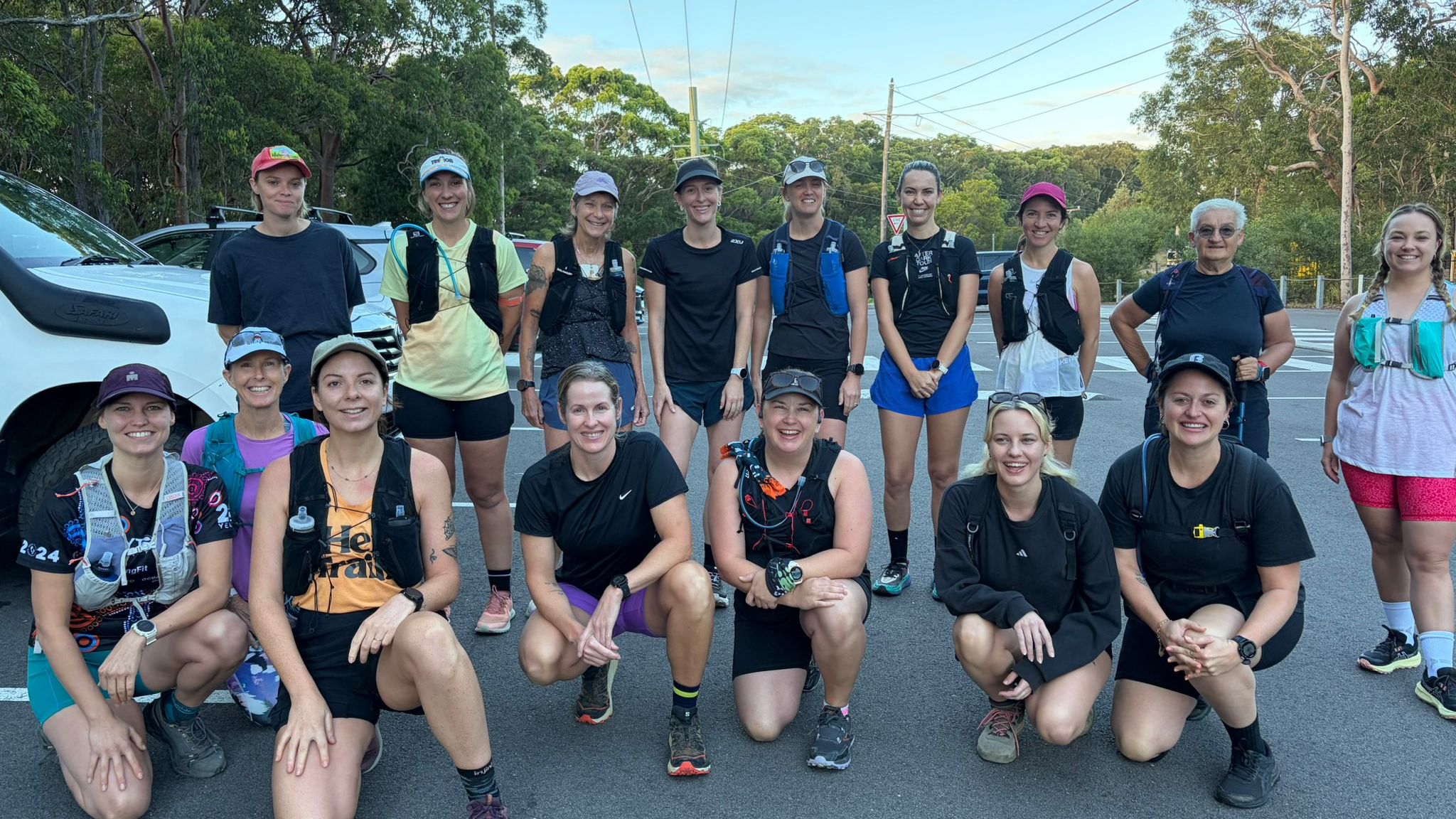
How to Fuel a 90-Minute Her Trails Group Run
Trail Notes | Nutrition & Fuelling
start supported
Fuelling a 90-Minute
Her Trails Group Run.
A 90-minute group run sits in the space between a short everyday session and a true long run.
It is long enough for your starting fuel, hydration and energy availability to matter, but it does not automatically require an elaborate race-fuelling plan.
For many women, the most important step is not eating large amounts during the run. It is avoiding the pattern of arriving under-fuelled because the run starts early, breakfast felt inconvenient or the session did not seem long enough to justify food.
You do not need to earn breakfast by completing the run first.
Food before training is part of how you support the session, not a reward for finishing it.
Before the run
Begin with energy available
If you have two or more hours before the run, eat a familiar meal containing carbohydrate, some protein and enough fluid to begin comfortably hydrated.
With more time
- Porridge with banana and yoghurt
- Toast with eggs and fruit
- Cereal with milk and a banana
- A bagel or English muffin with a familiar topping
If the run starts early and you have only 30 to 60 minutes, choose something smaller and easy to digest.
With less time
- A banana
- Toast with honey or jam
- A small sports bar
- A fruit smoothie
- A few crackers, dates or other familiar carbohydrate food
During the run
Do you need to eat?
There is no exact point at which your glycogen stores suddenly disappear. How much carbohydrate you use depends on your pace, terrain, starting fuel, fitness and the intensity of the session.
For an easy-to-moderate 90-minute run, a woman who ate beforehand may not need substantial fuel during the session. However, carrying something remains good trail practice, and eating during the run may be useful in several situations.
Consider eating during the run if
- You could not eat adequately beforehand
- The terrain or effort is particularly demanding
- You notice hunger, light-headedness or falling energy
- You have another demanding session later that day
- You are practising fuelling for a longer event
- Your run may extend beyond the planned time
A small carbohydrate serving taken around 30 to 60 minutes may be enough. This could be a gel, half a bar, a banana, dried fruit, chews or another food you tolerate comfortably.
Carry fuel even if you do not expect to need it. The trail, weather and group may change the time you spend outside.
Hydration
Drink for the conditions
There is no single amount every runner should drink. Your needs will change with the temperature, humidity, pace, terrain, clothing and your individual sweat rate.
Cool conditions
You may drink less, but still carry water. Cold weather can make thirst less obvious even though you are continuing to lose fluid.
Mild conditions
A single flask may be sufficient for some runners, while others need more. Use your previous runs and the route information to guide what you carry.
Hot or humid conditions
Carry more fluid, start drinking earlier and adjust your effort. Do not rely on someone else having spare water.
Avoid forcing excessive amounts of water. More is not always better. Drink according to a practised plan, the conditions and your thirst.
Electrolytes
Do you need them?
Electrolytes are not essential for every 90-minute run. They may be useful in hot or humid conditions, when you are sweating heavily or when you know you lose a large amount of salt in your sweat.
Check whether your product contains carbohydrate as well as electrolytes. An electrolyte tablet with no carbohydrate provides fluid and minerals, but it does not provide meaningful energy.
What to carry
The simple group-run kit
- Water appropriate for the conditions
- One familiar carbohydrate snack
- Electrolytes if conditions or your sweat losses warrant them
- Any personal medication you may need
- A small bag for wrappers and rubbish
- A recovery snack if you have a long drive home
After the run
Complete the session with recovery
Eat a normal meal or snack containing carbohydrate and protein after the run. This might be breakfast, a yoghurt and fruit smoothie, eggs on toast or a sandwich and milk-based drink.
You do not need a complicated recovery formula. You need enough food, reasonably soon, to support the rest of your day and the training still ahead.
Her Trails coaching cue
Eat something before you begin. Carry something in case you need it. Recover afterwards. Fuelling a 90-minute run can be that simple.
Fuelling is not reserved for race day or ultra distances.
It is one of the everyday ways you help your body meet the work you are asking it to do.
start supported
Written by the Her Trails coaching team
Trail Notes are evidence-informed guides written for women who train, race and run on trails.
General education only, not medical or individual nutrition advice. Individual needs vary with health, training, conditions and dietary requirements.