Not Under-trained. Under-fuelled.
Trail Notes | Nutrition & Fuelling
Why more training is not always the answer
Not Under-trained.
Under-fuelled.
Many active women are not under-trained. They are under-fuelled.
You can complete the sessions, show up consistently and still feel flat, heavy or slow to recover. When that happens, the missing piece is not always more discipline or another training stimulus. Sometimes your body needs more energy to support the work you are already doing.
Under-fuelling can be deliberate, but it is often unintentional. Training increases, work becomes busy, meals are delayed, appetite is lower after a hard session, or the food that once supported your week no longer matches what the week is asking from you. The gap can grow quietly.
Your body needs enough energy not only to finish the session, but to keep you healthy, adapting and ready to train again.
Training is only one part of the energy equation. Your body is also supporting your brain, bones, hormones, immune system, temperature regulation, digestion and tissue repair.
Trail Note · 01
What energy availability means
Energy availability describes the dietary energy remaining for normal physiological function after the energy cost of exercise has been accounted for. It is not simply the number of calories you eat, and it is not the same as feeling hungry. It is the relationship between intake, exercise and the needs of your body.
When energy availability remains too low for too long, the body may begin making trade-offs. You may still finish your sessions, but recovery, menstrual function, bone health, immunity, mood and performance can be affected.
Problematic low energy availability can contribute to Relative Energy Deficiency in Sport, known as REDs. REDs is a clinical syndrome and cannot be diagnosed from one symptom or an online checklist. It requires appropriately qualified clinical assessment.
Trail Note · 02
Signs worth paying attention to
No single sign proves that you are under-fuelling, and these experiences can have many causes. A pattern, particularly alongside rising training demands, is worth noticing.
What you might notice
- Feeling persistently flat, heavy or unusually depleted in training.
- Recovery taking longer than expected.
- Frequent illness, recurrent niggles or bone stress injuries.
- Poor sleep, waking hungry or feeling ravenous late in the day.
- Difficulty concentrating, low mood or reduced motivation.
- Feeling cold more often than usual.
- Changes to your menstrual cycle, including irregular or missed periods.
These signs do not mean something is wrong with your character or commitment. They may mean your body needs more support.
Trail Note · 03
Why lighter is not always better
Many women have absorbed the message that smaller, lighter or eating less will automatically improve performance. But when restriction leaves too little energy available, training quality and adaptation can stall while health risks rise.
A lower number on the scale is not a performance gain if it costs you strength, consistency, bone health, mood, menstrual function or the capacity to recover.
Her Trails coaching cue
Strong training requires enough energy to complete the work, absorb it and come back ready to build again.
Trail Note · 04
Start with the foundations
You do not need to track every number perfectly. Begin by making it easier to eat consistently and by matching more food to the days that ask more of you.
Five practical places to begin
Eat across the whole day. Avoid relying on dinner to replace everything your body has used since morning.
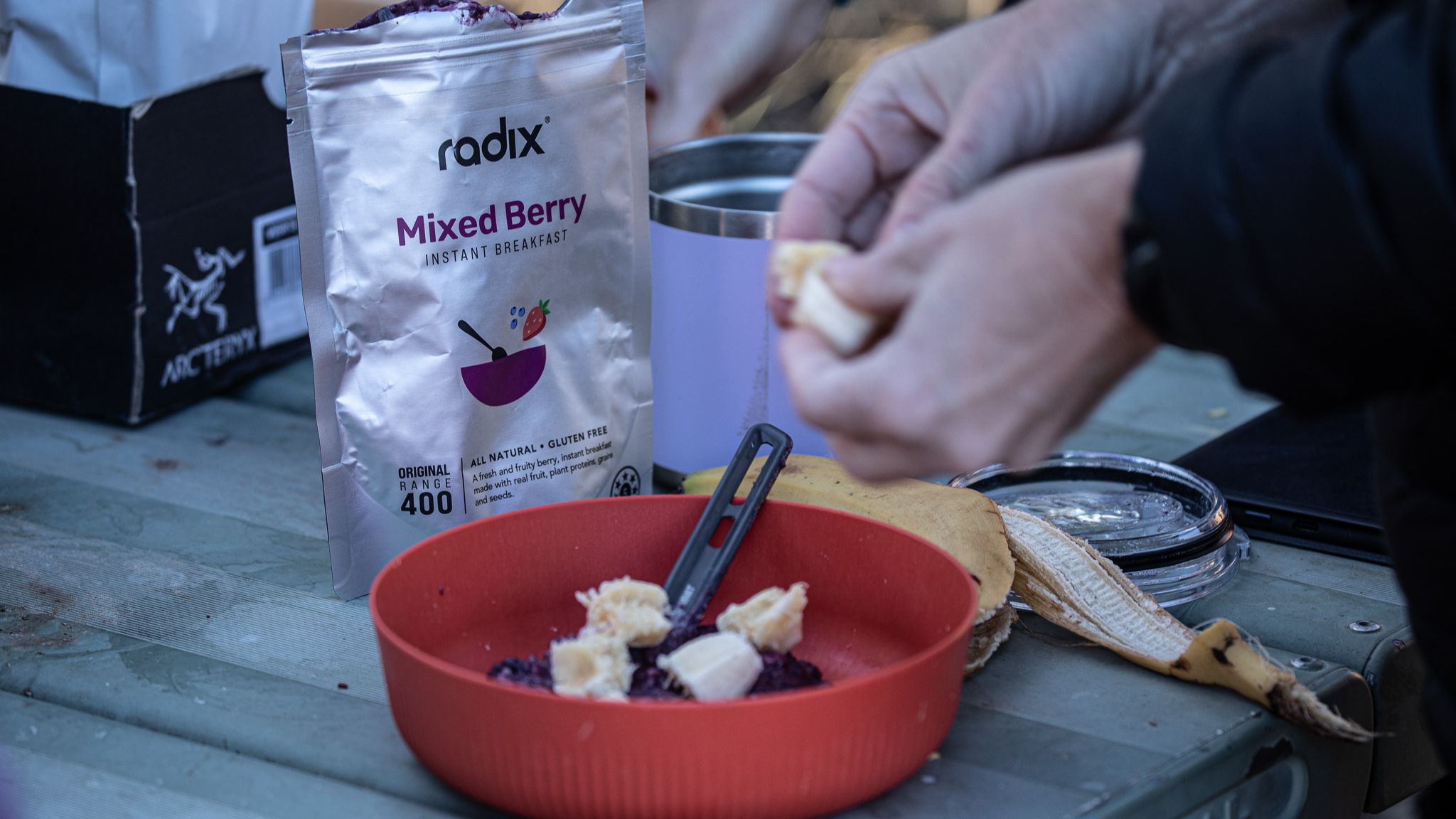
Fuel before longer or harder sessions. Starting adequately fuelled supports training quality and reduces the size of the recovery gap afterwards.
Recover soon after training. Include carbohydrate to replenish energy and protein to support tissue repair, then follow with a complete meal.
Keep convenient food available. Snacks in your bag, car or workplace can stop a busy window becoming an accidental six-hour gap.
Scale intake with training. Bigger training days generally require more total food, particularly carbohydrate, not the same intake stretched across more work.
If increasing food feels difficult, symptoms persist, your cycle has changed, or food and body-image concerns are part of the picture, you deserve individual support. A sports dietitian can assess the full context and help you build a plan without guesswork.
Trail Note · 05
Fuel the life you are asking your body to hold
You are not only fuelling kilometres. You are fuelling work, family, thinking, hormones, repair, sleep and the ability to keep doing the activities you love.
Sometimes progress comes from another session. Sometimes it comes from giving your body enough energy to benefit from the sessions already in the plan.
More discipline is not always the answer. More support might be.
Eat consistently. Fuel the work. Recover deliberately. Pay attention when your body starts making trade-offs.
Fuel the work, support the woman
Written by the Her Trails coaching team
Trail Notes are evidence-informed coaching journals written for women who train, race and run on trails.
Go deeper inside Her Trails
Inside Base Camp, Know Your Macros: Fuel and Recover and the Fuelling Foundations lessons explore how to put these principles into practice. Bring your questions to Coaching Corner, or explore training built around female physiology through our programs.
General education only, not medical or nutrition advice. Persistent fatigue, menstrual changes, recurrent injury, low iron or concerns about REDs should be assessed by a sports dietitian and medical practitioner. REDs diagnosis and risk assessment require appropriately qualified clinical professionals.
Selected references
Stellingwerff T et al. Review of the scientific rationale, development and validation of the IOC Relative Energy Deficiency in Sport Clinical Assessment Tool: V.2. Br J Sports Med. 2023.
Mountjoy M et al. 2023 International Olympic Committee consensus statement on Relative Energy Deficiency in Sport. Br J Sports Med. 2023.
De Souza MJ et al. 2014 Female Athlete Triad Coalition Consensus Statement on Treatment and Return to Play. Br J Sports Med. 2014.