
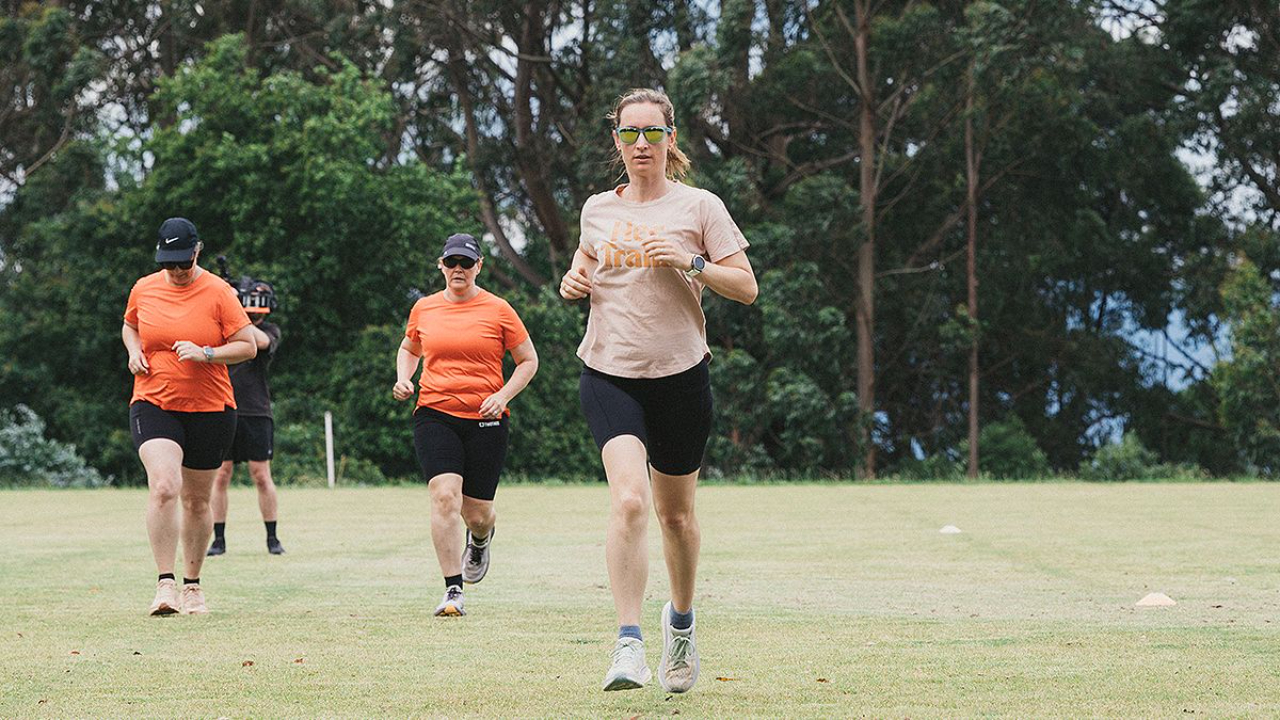
Coming Back to Running After Injury
Trail Notes | Female Athlete Recovery
for the runner returning, not restarting
Coming Back to Running
after injury.
Coming back from injury is not a race against your old self. It is a slow, deliberate rebuild of trust between you, your body, and the trail.
Injury is one of the loudest experiences a runner can have. It interrupts your week, your plan, your race goals, and the version of yourself you had built around running. It can be acute and obvious, like a roll of the ankle on a technical descent, or quiet and creeping, like a tendon that whispered for weeks before you listened.
Then comes the part nobody really teaches us. The coming back. The first walk. The first easy jog. The first time your foot hits the trail and you wait, holding your breath, to see what your body will say.
This is the part where many runners get it wrong. Not because they are not strong, but because the return is more complex than the injury itself. It needs structure, patience, and a redefinition of what success looks like in the early weeks.
Your return run is not about proving anything. It is about gathering information.
Treat the first weeks as a conversation with your body, not a test of it.
Trail Note · 01
Start by understanding what actually happened
Before you plan a comeback, get a clear picture of the injury itself. Was it a soft tissue strain, a bone stress injury, a joint issue, a tendon that has been brewing? Was there a single moment of trauma or a pattern of overload?
A good return plan starts with a good diagnosis. If you have not seen a physiotherapist, sports doctor or qualified clinician, that is the first step, not the running. We can guide your training and your structure, but we cannot replace clinical assessment.
Once you know what tissue was affected, you can begin to understand the timeline. Muscle behaves differently to tendon. Tendon behaves differently to bone. Each has its own healing window and its own load progression rules.
HOW LONG DOES HEALING ACTUALLY TAKE?
Your body heals on its own timeline, and different tissues have very different clocks. Muscles tend to settle fastest, often within a few weeks for minor strains. Tendons take longer because they have a lower blood supply, and bone stress injuries need the most patience of all.
The part that catches many runners out: your aerobic fitness comes back quickly, often within a few weeks of easy training. But that fit feeling can run well ahead of how ready your tissue actually is to handle load. Feeling good is not the same as being ready.
This is not a reason to panic. It is just a reason to progress a little more slowly than feels necessary.
A diagnosis is not a setback. It is the start of an honest plan.
Trail Note · 02
The honest reason many comebacks fail
Many re-injuries do not happen because the original problem was not healed. They happen because the runner tried to pick up where she left off, instead of starting where her body actually was.
Your aerobic fitness and your structural tolerance rebuild at different speeds. You can feel lung-fit and leg-strong before the tendon, bone or joint you injured is ready for that load. The brain gets there first. The tissue takes longer.
This is why the early return weeks should feel almost embarrassingly easy. If your run feels too easy, you are probably on the right page. If your run feels normal, you may already be doing too much.
THE COMEBACK HAS THREE STAGES, NOT ONE
Sports medicine broadly breaks return to sport into three phases: getting back to moving, getting back to your sport, and getting back to performing. Many of us try to skip straight to phase three.
The gap between "I can run" and "I am ready to train hard" is where many reinjuries happen. Your fitness bounces back fast, within a few weeks of easy movement. Your connective tissue catches up more slowly, often taking 2 to 3 months to adapt to load.
The goal of the first phase is not to run. It is to move, build tolerance, and get your body used to the idea of running again. That is real progress.
Trail Note · 03
Walk before you run, and call it training
Walking is the most underused tool in a return-to-running plan. It loads tissue, restores movement patterns, supports cardiovascular fitness, and gives your body a chance to remember what daily impact feels like, at a fraction of the cost of running.
In the early weeks of return, walking is not a holding pattern. It is your training. Start with the kind of walks you would normally not bother to count. 20 minutes. 30 minutes. Flat at first, then with some gentle undulation. Add a slight hill or a short stair climb if your clinician has cleared you.
Watch how your body responds the next day. The next day matters more than the session itself. If you wake up calm, mobile and pain-free, that is a green light to keep building. If you wake up sore, swollen or stiff, that is information.
Her Trails coaching cue
The most important data point in a comeback week is not the run. It is how you feel the next morning.
Trail Note · 04
A simple early return structure
Once you are cleared to add running, the most reliable structure is short, repeated, walk-run intervals on flat, predictable terrain. This is not because you are weak. It is because intermittent loading lets you spread impact across the session and lets you read your body in small, manageable doses.
An example walk-run structure
Week 1: Walk 30 mins on flat terrain, 3 to 4 times. No running yet.
Week 2: Walk 5 mins, jog 1 min, repeat 4 to 6 times. Twice in the week.
Week 3: Walk 3 mins, jog 2 mins, repeat 6 times. Twice in the week.
Week 4: Walk 2 mins, jog 3 to 4 mins, repeat 5 to 6 times.
Week 5 onwards: Reduce walking gradually as the next-day signal stays green.
This is a guide, not a prescription. Some injuries need a slower ramp, some need a more conservative load profile, and some need cross-training instead of running for longer. Use this as a shape, then adjust to the conversation between you and your clinician.
Trail Note · 05
Listen to the next-day signal, not the in-run feeling
Adrenaline, endorphins and the joy of finally being back can mute the body during a return run. You may finish thinking, "that felt great, I am back." Then 18 to 36 hours later, the injury speaks up.
The most useful question is not, "how did the run feel?" It is, "how did my body respond the next day, and the day after that?" Low-grade swelling, lingering tightness, a small return of the original pain, or stiffness that takes the morning to clear are all signs that the load was a little too much, too soon.
When that happens, you do not need to start again. You just need to repeat the previous week, instead of progressing to the next one.
Traffic-light check the morning after
Green: pain free, calm tissue, normal mobility. Progress next session.
Amber: mild stiffness or low-grade ache that clears in 24 hours. Repeat the week, do not progress.
Red: original pain returns, sharp pain, new swelling, limping. Stop, rest, and check in with your clinician.
Trail Note · 06
Keep strength and cross-training in the plan
Strength is not optional in a comeback. It is what keeps the gains you make on the run safe, and what protects the tissue that is being asked to load again. For many female trail runners, a basic twice-weekly strength routine through the return phase is a valuable investment.
Cross-training also stays in the plan, even as running returns. Cycling, swimming, hiking, the elliptical, the stair-climber and the rower all allow you to maintain aerobic fitness without spiking the impact load on the injured area. The fitter your aerobic system stays, the more comfortable your eventual long runs will feel.
Cross-training is not a consolation prize. It is part of an intelligent build back to trail readiness.
A runner who loves only running will struggle through injury. A runner who learns to love training will come back stronger.
Trail Note · 07
When the trail starts to feel possible again
Most return programs begin on flat, even terrain for a reason. The trail asks more of your body than the road or the path. Uneven footing, micro-adjustments, climbs, descents, ankle stability and reactive strength all stack on top of basic running load.
Once you can complete a continuous 30 to 40 minute easy run on flat ground with green next-day signals, that is usually the cue to introduce gentle trail. Start with smooth fire trail or wide path before adding technical singletrack. Add small climbs before bigger ones. Add short descents before long ones.
Power-hike the climbs that feel like too much. Walk the descents that feel uncertain. Your skill, confidence and tissue tolerance need to rebuild together. Rushing one usually punishes the others.
Trail Note · 08
The mental return matters as much as the physical one
A comeback is not only a physical rebuild. It is an emotional one. You may feel anxious every time you lace up. You may flinch when you feel a twinge. You may grieve the version of yourself who was about to race. You may compare yourself to who you were six months ago and feel like you are nowhere.
All of that is normal. None of it means you are weak. It means you are a woman who cares about her running and who is meeting one of the hardest parts of being an athlete.
The mindset that helps the most is curiosity, not comparison. Ask your body what it can do today, not what it could do before. Celebrate the small wins, especially the boring ones. The 20 minute walk. The pain-free morning. The first time you stopped scanning your body mid-run because it actually felt fine.
Her Trails coaching cue
Your old paces are not the goal. The goal is to become a runner whose body trusts her again.
Trail Note · 09
Red flags that mean stop and reassess
Some signals are not progress. They are warnings. Knowing them protects you from a longer setback.
Pause and check in with your clinician if you notice
Pain that increases through a run instead of settling.
Pain that makes you change your gait or limp.
Swelling that returns or worsens.
Sharp, localised pain in bone, especially if it is worse at night.
Pain that wakes you from sleep.
Any new neurological symptom, numbness, weakness or instability.
Carrying on regardless of these signals is not bravery. It is how a small comeback becomes a much longer one.
Trail Note · 10
Fuel the rebuild, do not under-eat the recovery
A common mistake during injury time off is to eat less because you are running less. This is one of the worst things you can do for the tissue that is trying to rebuild.
Healing tissue is metabolically expensive. Bone, tendon and muscle all need adequate energy, protein and a full nutrient base to repair. Under-fuelling slows recovery, weakens the immune system, and increases the risk of returning to running with a body that is still in deficit.
Eat consistent meals across the day. Spread protein across breakfast, lunch and dinner. Do not skip carbohydrates because you are not racking up the mileage. Hydrate well. If you have any history of low energy availability or disordered eating patterns, this is a good moment to be supported by a dietitian.
EATING FOR A COMEBACK
Injury is not a reason to eat less. If anything, your body needs more support when it is repairing tissue. Protein is the big one: spread it across your meals throughout the day rather than loading it all at once.
Foods such as bone broth, eggs, citrus and berries can be part of a varied, protein-adequate diet while you rebuild. The evidence for specific collagen or vitamin C timing around loading sessions is still emerging, so focus on regular meals first.
And if you have been underfuelling (which a lot of us do, especially when we are not training at our usual volume), know that low energy availability can slow healing. This is the season to eat like you mean it.
Trail Note · 11
Sleep, stress and the parts that are not training
Sleep is when most of the rebuilding happens. Stress, on the other hand, competes with your recovery for the same hormonal and energy resources. A comeback that is happening alongside poor sleep and chronic stress will be slower, more fragile and more likely to stall.
You cannot always lower the stress in your life. But you can prioritise sleep, even on the weeks where your training is small. You can let the comeback have the rest it needs, instead of trying to outrun a life that is also asking a lot of you.
If the rest of life is loud, take that into account when setting your weekly plan. A return to running goes much better when it is not the only thing in your week asking you to be brave.
Trail Note · 12
Rebuilding identity, not just fitness
Injury often shakes more than fitness. It shakes identity. If your sense of who you are has been closely tied to your running, you may feel adrift. You may not feel like an athlete. You may not feel like yourself.
The comeback is also an opportunity to widen that identity. To remember that you are a runner whether or not you are running today. To notice the other parts of you that movement supports, but does not define. To soften the all-or-nothing thinking that makes a layoff feel like a loss of self.
Many of the strongest comebacks we coach are the women who used their time off to deepen who they were, not only to repair the muscle, tendon or bone that brought them to a stop.
A comeback is not where you pick up. It is where you become someone slightly different, in a body that has just taught you something.
Patience. Cross-training. Strength. Sleep. Fuel. Curiosity. The next-day signal. And the willingness to repeat the small steps until they become the bigger ones.
Trail Note · 13
The invitation
If you are coming back from injury, you do not need to apologise for being where you are. You do not need to skip steps to catch up. You do not need to silence the fear or pretend the layoff did not hurt.
You just need to begin, gently, and to keep listening. To walk before you run. To trust the next-day signal. To train your strength, fuel your tissue, sleep through the rebuild and add small amounts of trail as your body says yes.
A patient comeback is not slower. It is the only kind that lasts.
come back like a coach, not a critic
Keep going with us