
How We Support Each Other on a Her Trails Group Run
Trail Notes | Her Trails Community
we move together
How We Support
Each Other on the Trail.
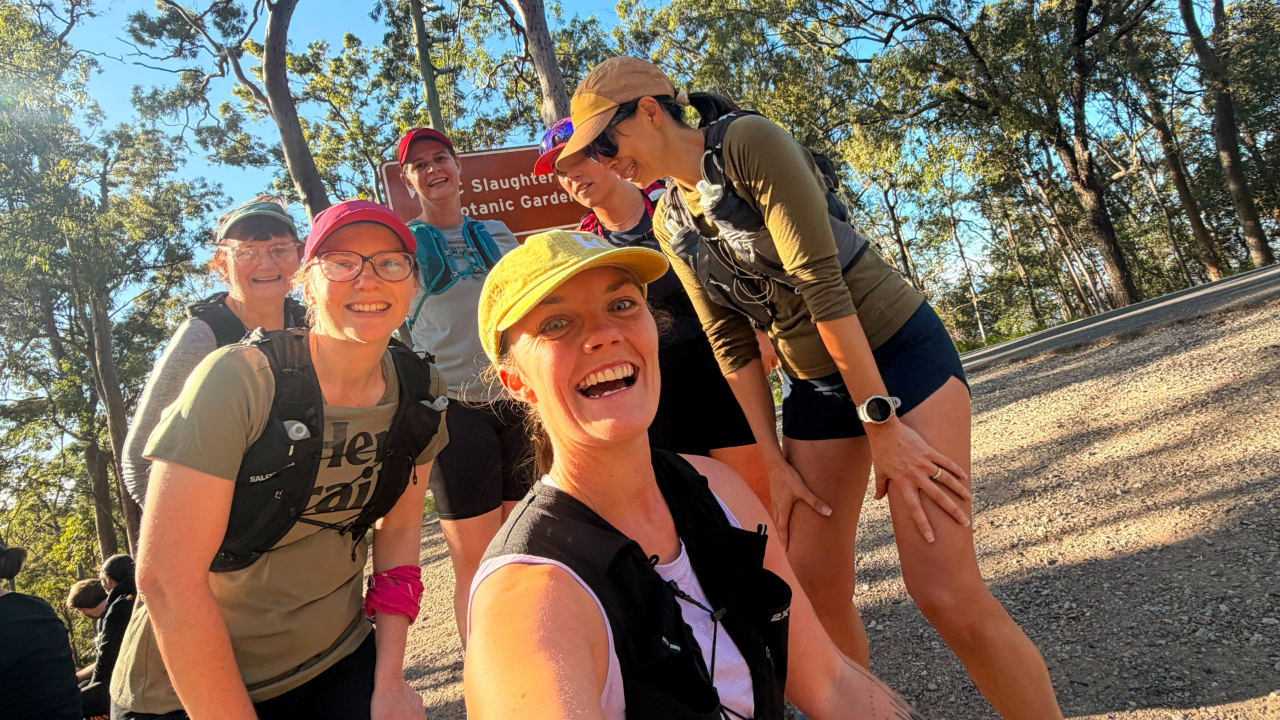
A Her Trails group run is more than a collection of women completing the same route at the same time.
It is a shared experience in which every runner contributes to the safety, confidence and sense of belonging within the group.
You do not need to be the fastest runner, a coach or a qualified first aider to be supportive. Often, support looks much simpler: waiting at a junction, checking in without judgement, making space for someone to move at her own pace or noticing when a runner is no longer connected to the group.
Support does not mean taking responsibility for someone else’s entire run.
It means paying attention, communicating clearly and helping the group make room for different bodies, experiences and paces.
Before the run
Support begins before anyone starts moving
Arrive with enough time to meet the leader, listen to the briefing and understand the route. The briefing may include the expected distance, terrain, regrouping points, weather considerations and what to do if you need to turn back.
If you are managing an injury, returning after illness, new to trails or uncertain about completing the route, speak privately with the group leader before the run.
You do not need to share private medical details with the group. Give the leader enough relevant information to help you participate safely.
On the trail
Stay connected to the group
Group running does not require everyone to run side by side. The group will naturally stretch across hills and technical terrain. What matters is maintaining connection through agreed regrouping points, clear communication and awareness of the runners around you.
Wait at junctions
Never assume the runner behind knows which direction to take. Wait at an unclear turn until the next person has seen you and understands where the route continues.
Tell someone before stopping
If you need to adjust clothing, use the bathroom, take medication or stop for any reason, tell the leader or another runner. Do not silently step away.
Do not leave alone
If you need to shorten the route or return to the start, speak with the leader first. The leader can help determine the safest option and whether someone should accompany you.
Respect the regroup
When the back of the group arrives, allow those runners time to breathe, drink or eat before moving again. A regroup should create a pause for everyone, not only those who arrived first.
Different experiences
Support without making pace the story
Walking a climb, slowing on technical terrain or taking longer at a regroup does not require an apology. Trail running naturally involves changing pace in response to terrain, effort, experience and how the body feels that day.
Avoid assuming that a woman moving at the back needs rescuing, coaching or constant encouragement. She may be moving at exactly the right effort for her.
Try asking: “Would you like company, practical help or some quiet space?”
Support may mean sharing the next section together. It may also mean giving someone room to find her rhythm while remaining nearby.
When someone is struggling
Pause, check and communicate
A runner may become quiet, tearful, unusually breathless, unsteady or confused. She may also simply tell you that something does not feel right.
Do not minimise what she is experiencing or pressure her to continue. Stop somewhere safe and notify the group leader.
A simple support sequence
Pause: Move away from immediate hazards and stop the effort.
Ask: “What are you feeling?” and “What do you need right now?”
Notify: Tell the group leader rather than managing the situation alone.
Support: Help with warmth, shade, food, fluid or equipment where appropriate.
Reassess: Continuing, shortening the route or seeking help should be based on the situation, not pressure to finish.
Emotional support
Not every difficult moment is physical
Running can create space for emotions that have been held together elsewhere. A runner may become overwhelmed, anxious or tearful without needing the group to solve what is happening in her life.
Stay calm. Ask whether she wants company, a slower walk, a quiet pause or the group leader. Avoid asking for personal details in front of others.
You can be kind and present without becoming someone’s counsellor, clinician or rescuer.
Safety and emergencies
Know when support needs to escalate
Community support does not replace professional medical assistance. If there is immediate danger or a potentially life-threatening medical emergency, call Triple Zero (000).
If something serious happens
- Stop the activity and make the immediate area safer if possible
- Notify the group leader
- Provide first aid only within your level of training
- Call Triple Zero (000) for a life-threatening emergency
- Provide your location and the nature of the emergency
- Use a nearby emergency-marker code where available
- Follow the emergency operator’s instructions
After the run
Finish with care
Check that the runner you spent time with has returned safely and has what she needs. If someone became unwell or distressed, allow the group leader to follow up through the appropriate Her Trails process.
Do not retell another runner’s difficult moment as group conversation. Her experience belongs to her.
If you noticed a route hazard, near miss or safety concern, tell the group leader before leaving.
Her Trails coaching cue
Look ahead for the trail, beside you for connection and behind you for the person who may no longer be there. A supported group is built through small acts of awareness across the whole run.
We do not need every woman to move in the same way to move together.
We need awareness, communication and a shared commitment to making room for one another on the trail.
we move together
Written by Her Trails
Our community runs create welcoming spaces for women to move, connect and build confidence on the trail.
This guide provides general community and safety information. It does not replace first-aid training, medical advice, emergency-service instructions or directions given by a Her Trails group leader.