
Her Trails Coaching
GPT 100 Miler Solo
Program for Women
Built for the full scale of the GPT100 Miler. 162 kilometres, 7,700 vertical metres, technical mountain terrain, and the mental demand of moving through day and night across one of Australia's most rugged trail systems. This program coaches you as a whole runner: body, mind, fuelling, logistics and the quiet resilience that 100 miles actually requires.
The Course
Running the GPT100 Miler
The GPT100 Miler is a point-to-point journey across the entire Grampians Peaks Trail, beginning at Mt Zero and finishing in Dunkeld. It is one of Australia's defining mountain ultras, with sustained climbs, rugged descents, exposed ridgelines, remote terrain, and long stretches that ask you to keep moving well after comfort has left the room.
You will hike significant portions of this course. You will run through at least one full night. You will make hundreds of small decisions about pacing, eating, gear and effort across 30 to 50 hours of forward motion. These are skills, and they are trained.
This program is built specifically for those demands. Not just to get you to the start line, but to help you arrive with the durability, mountain skill, fuelling practice and internal steadiness required for 100 miles.
The Four Stages
What you will actually run
The 162km course traverses the full spine of the Grampians range across four stages, each with its own terrain character and physical demand. Understanding what each stage asks shapes how we train for it.
How We Train For It
How we build you toward 100 miles
The 20 weeks move through five phases: Foundation (aerobic consistency and recovery habits), Building (progressive volume and elevation), Endurance (extended time on feet and fatigue resistance), Peak Specificity (race simulation, crew planning, night running), and Taper (a deliberate 3 to 4 week reduction that protects both freshness and belief).
Training is released weekly. This is intentional. Rather than locking into a rigid 20-week plan, you meet each week where you are: physically, mentally and hormonally. Cycle-aware adaptation is built in. The aerobic base is the engine, with approximately 80% of sessions at conversational effort and higher intensity layered in during Build and Peak phases only.
Climbing and Hiking Power
With 7,700m of vertical gain, you will hike 40 to 50 percent of this course. That is strategy, not failure. Power hikes, tempo climbs, run-to-hike transitions and sustained ascent sessions are programmed throughout, building the capacity to move efficiently uphill for hours. Pole integration is included for runners who plan to use them.
Technical Descent Control
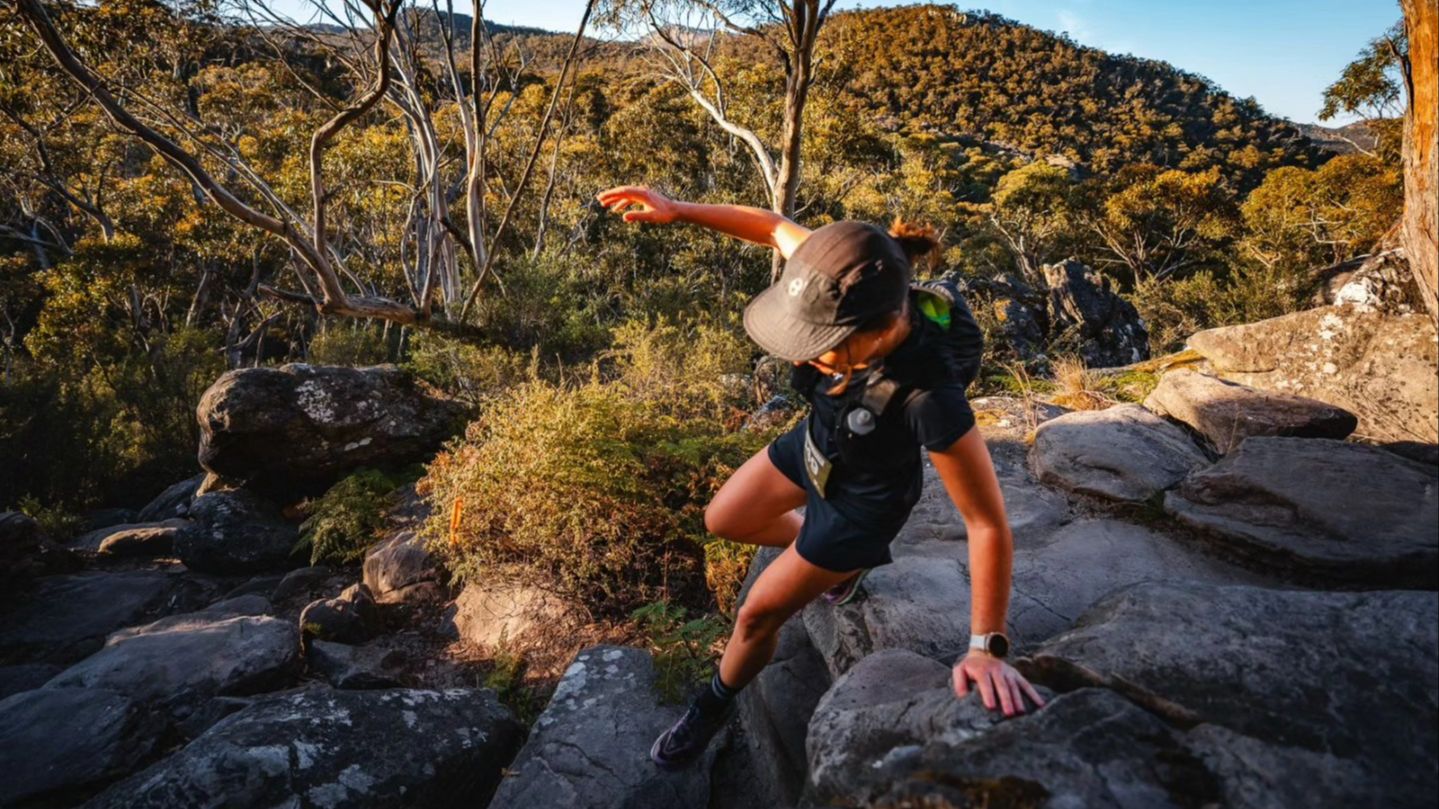
Sandstone slabs, boulder fields and stepped trails on exhausted legs. Dedicated descent sessions train foot placement, quad loading and movement efficiency on rocky surfaces so the technical sections of Stages 3 and 4 do not unravel your race when fatigue is highest.
Back-to-Back Endurance
The final stages arrive when you already have 90km in your legs. Back-to-back long run weekends build toward 9 to 11 hours across two days with elevation: a longer day when fresh, a shorter day on tired legs. The fatigue accumulation is the training. These weekends simulate the reality of Stages 3 and 4 and are followed by extended recovery windows.
Night Running and Race Logistics
Most runners will move through at least one full night on course. Night sessions are introduced in the Build phase and repeated through Peak: headlamp familiarity, depth perception on technical terrain, eating in the dark. Crew planning, checkpoint strategy, drop bag preparation and pacer logistics are covered in dedicated sessions during Weeks 14 to 17.
Fuelling Across 30+ Hours
Eating for 30 to 50 hours on trail is qualitatively different from 100km fuelling. Gut training, solid food tolerance, hydration in remote terrain, eating while climbing, and managing nutrition across temperature shifts from day heat to overnight cold. Fuelling practice is structured into long runs and back-to-back weekends so race-day nutrition is a trained skill.
Deep-Race Composure
The Major Mitchell Plateau at night. The stepped climbs of the Serra Range on spent legs. At 100 miles, you may have 6 to 8 hours where forward motion is a deliberate choice. This program includes specific mindset work: breath patterns for sustained climbing, internal dialogue frameworks, and decision-making practice under fatigue. Recovery is training. Adaptation happens in rest, not in the session itself.
Before You Begin
This is a high-demand program
To step in well, you should already have a strong endurance base: at least one 100km finish in the past 12 months, consistent weekly mileage of around 60km or more, and long runs extending beyond 30km. From there, we guide you step by step into the specific demands of mountainous 100 mile racing.
If you are unsure whether this program is the right fit, reach out to us at [email protected] and we can help you find the most supportive starting point.
What's Included
Everything you need, in one place
Designed in close collaboration with Ray Zahab, a pioneering ultra runner and adventurer who has run over 17,000 kilometres across the world's deserts and completed multiple unsupported expeditions in some of the coldest places on the planet. His practical mountain wisdom on mindset, posture, breath and fuelling strategy sits alongside the Her Trails coaching team. This is not a plan you follow alone. You are coached in real time, as a whole runner, by a team built by and for women.
Training Program
- ●4 to 6 run sessions per week with progressive B2B long runs building to 9 to 11 hours
- ●1 to 2 strength sessions weekly: posterior chain, single-leg stability, joint resilience
- ●Scheduled mobility and yoga sessions for durability and range
- ●Crew planning, drop bag strategy and race-week preparation
- ●3 to 4 week taper with deliberate volume reduction for race-day freshness
Coaching + Community
- ●Weekly live coaching calls, join live or watch replays
- ●Cycle-aware adaptation with flex days for energy and load management
- ●Nutrition guidance and structured fuelling practice built into long runs
- ●Private community of runners preparing for the same race
- ●Access to the Her Trails community for ongoing connection
Also Worth Considering
Training for more than one goal this season?
Instead of purchasing individual programs, many runners choose the Her Trails All-In Membership for broader training support across the year. If you plan to complete more than one program this season, the All-In Membership is usually the most cost-effective option and gives our coaching team the ability to support you as you transition between races, training blocks and recovery periods.
Best Value
Her Trails All-In Membership
$220 / quarter
- ✓Access to every Her Trails program including trail, road and strength
- ✓Community and coaching platform with weekly coaching calls
- ✓Strength and mobility training for runners
- ✓Coaching support between races and training blocks
- ✓Ongoing community support and accountability
- ✓Discounts on merchandise and selected partner opportunities
Questions before you commit?
Choosing a program is a real commitment of time and energy, and it is normal to want to talk it through first. Here are a few places to start.
We can connect you with an All-In member for a relaxed call about the program, fitting training around work and family, or anything else on your mind.
Request a chatOr browse all our programs