
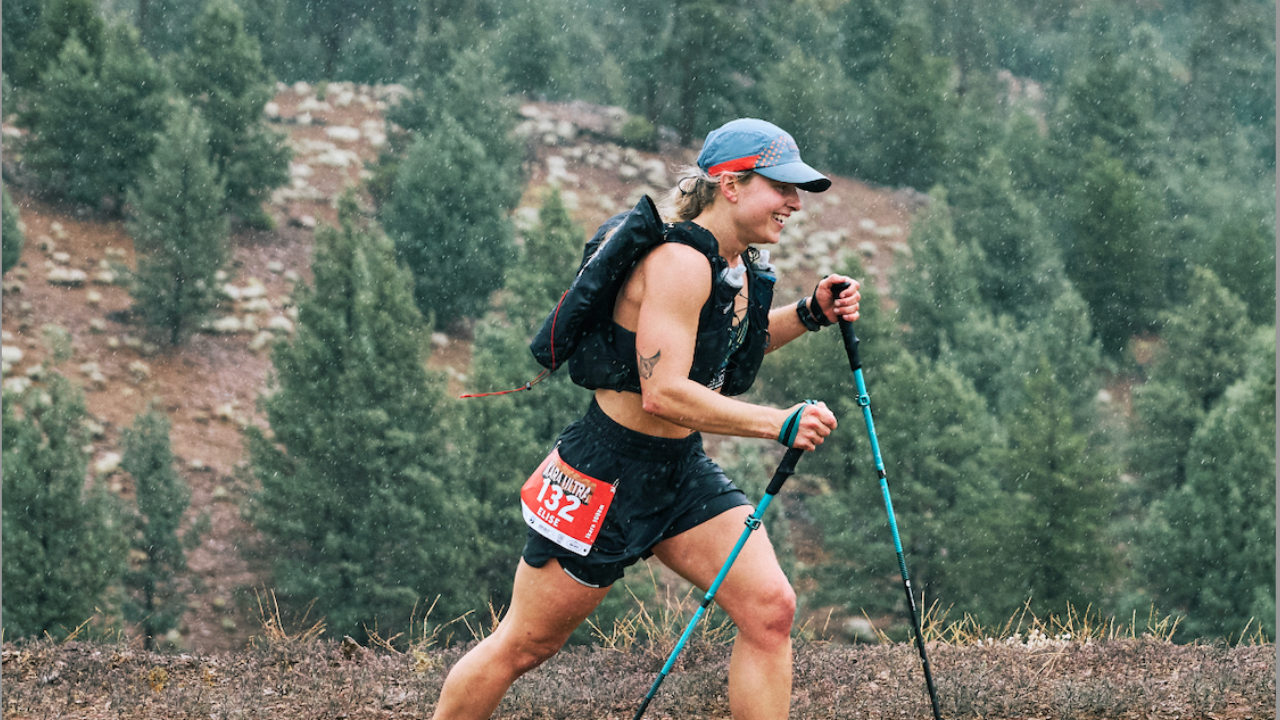
Running with Presence
Trail Notes | Training Rhythm
the skill your training plan doesn’t teach you
Running With
Presence.
Presence is not running slowly for the sake of it. It is the skill of noticing what is happening while it is happening, then adjusting with steadiness rather than force.
There are many ways to measure a run. Pace. Distance. Elevation. Heart rate. Splits. Time on feet. These metrics can be useful. They help create structure, reveal patterns and support progression. But they are not the whole experience of running.
Running with presence asks you to pay attention to the information your body is giving you in real time. Your breath. Your posture. Your effort. Your footstrike. Your energy. Your emotional state. Your relationship with the terrain beneath you.
The trail does not ask you to dominate it. It asks you to listen. Every surface, climb, descent, turn and change in weather offers information. Presence helps you respond rather than react.
Presence is not passive. It is an active training skill.
It is what separates running through your body from running with it.
Trail Note · 01
Why pace is not always the answer
Pace targets can be helpful in some sessions and counterproductive in others. On the trail, pace is rarely an honest signal. The same effort can produce wildly different numbers depending on the terrain, the temperature, the wind, the previous day’s session and your hormonal state.
When you fix yourself to pace alone, you risk overriding the more honest signals your body is offering. A run that should be easy becomes effortful. A session that should be cumulative becomes depleting. A taper becomes anxious instead of calm.
Presence asks you to widen the lens. Pace is one signal among many. Sometimes the strongest training choice is to hold back.
The watch tells you a number. Your body tells you the truth.
Trail Note · 02
Your body gives information before it gives warning signs
Most runners do not need to become more disciplined. Many need to become more attentive. Before fatigue becomes overwhelming, there are usually quieter signals. Breath becomes shallow. Shoulders rise. Cadence changes. The feet get louder. The jaw tightens. A familiar niggle begins to speak softly before it shouts.
Presence allows you to notice these cues early. Not so you can panic, but so you can respond. You might soften your effort. Shorten your stride. Take a walk break. Fuel earlier. Relax your shoulders. Change your line. Or simply stop forcing the session to be something it is not.
Her Trails coaching cue
The earlier you respond, the smaller the response needs to be. A small adjustment at minute ten is worth more than a forced rescue at minute fifty.
Trail Note · 03
Presence builds terrain intelligence
Trail running asks for more than fitness. It asks for adaptability. A runnable fire trail, a technical descent, a sandy stretch, a steep climb, a muddy section and a flowing single track all require different movement decisions.
The runner who stays locked into one pace or one rhythm will often work harder than she needs to. Presence teaches you to read the ground. You learn when to shorten your stride, when to hike before your heart rate spikes, when to open up, when to stay compact, and when to let the terrain set the rhythm.
This is a skill that develops slowly. It comes from logged hours, repeated terrain and the willingness to listen. Over time you begin to feel the shifts before you think them.
Do not ask, “How fast should I be going?” first. Ask, “What does this terrain require from me right now?”
Trail Note · 04
Why presence matters more for women
Women’s bodies are not static training machines. Energy, sleep, mood, temperature regulation, coordination, recovery and perceived effort can shift across the menstrual cycle, through perimenopause, under stress, during caregiving seasons and across different life stages.
This does not mean women need to train less seriously. It means we benefit from training more intelligently. Presence gives you a way to adapt without abandoning the plan. Some days the session will ask for confidence. Other days it will ask for care. Both can build capacity when you are honest about what your body is telling you.
Listening to your body is not the opposite of commitment. It is one of the ways commitment becomes sustainable.
Her Trails coaching cue
Train with the body you have on the day, not the body you wish you brought to the session.
Trail Note · 05
How to practise running with presence
You do not need a perfect trail, a quiet mind or a special session to practise presence. You can begin inside any run.
Before
Ask what the purpose of the run is. Easy, steady, recovery, strength, endurance or confidence. Let that guide your effort.
During
Notice breath, posture, foot placement, effort and emotion. Adjust early rather than waiting until the run unravels.
After
Reflect on what you learned, not just what you completed. Capture one sentence about how your body responded.
Over time
Look for patterns. Presence becomes powerful when it helps you understand your body across many weeks, not just one session.
Try the three-point check on your next run: the first 10 minutes, the middle, and the final 5. How is the breath? Where is the tension? What is the terrain asking? Could I soften by 5 percent and still move well?
Trail Note · 06
When presence is hardest
Presence is hardest in the moments you most need it. The end of a long run. The middle of a hard climb. The session you wanted to nail but your body is asking you to soften. The race that is not unfolding the way you planned.
These are the moments where the watch starts arguing with the body, where ego starts arguing with intuition, where the plan starts arguing with reality. Presence is the willingness to sit inside that disagreement long enough to make a good decision.
Sometimes the good decision is to push through. Often it is not. The skill is being honest enough to tell the difference.
Honesty is not weakness. It is the foundation of every training decision worth making.
Trail Note · 07
The deeper rhythm
Running with presence does not mean every run will feel calm, beautiful or easy. Some runs will feel awkward. Some will ask you to be patient. Some will reveal fatigue you did not realise you were carrying. Some will remind you that you are stronger than you thought.
The value is not in controlling every part of the experience. The value is in staying connected enough to respond.
Presence is how you stop training from becoming something you push through, and start making it something you are in relationship with. The body. The trail. The season you are in. The rhythm you are building. All of it matters.
A run done with presence is rarely the run you planned. It is usually the run your body actually needed.
And that, over time, is what builds a durable runner.
The invitation
On your next run, let one part of the session be less about proving and more about noticing. Notice your breath. Notice your feet. Notice where your effort changes. Notice the moment you want to rush. Notice the terrain.
You will not lose fitness by paying attention. You will gain a runner who knows herself.
run with the body you have today
Keep going with us