
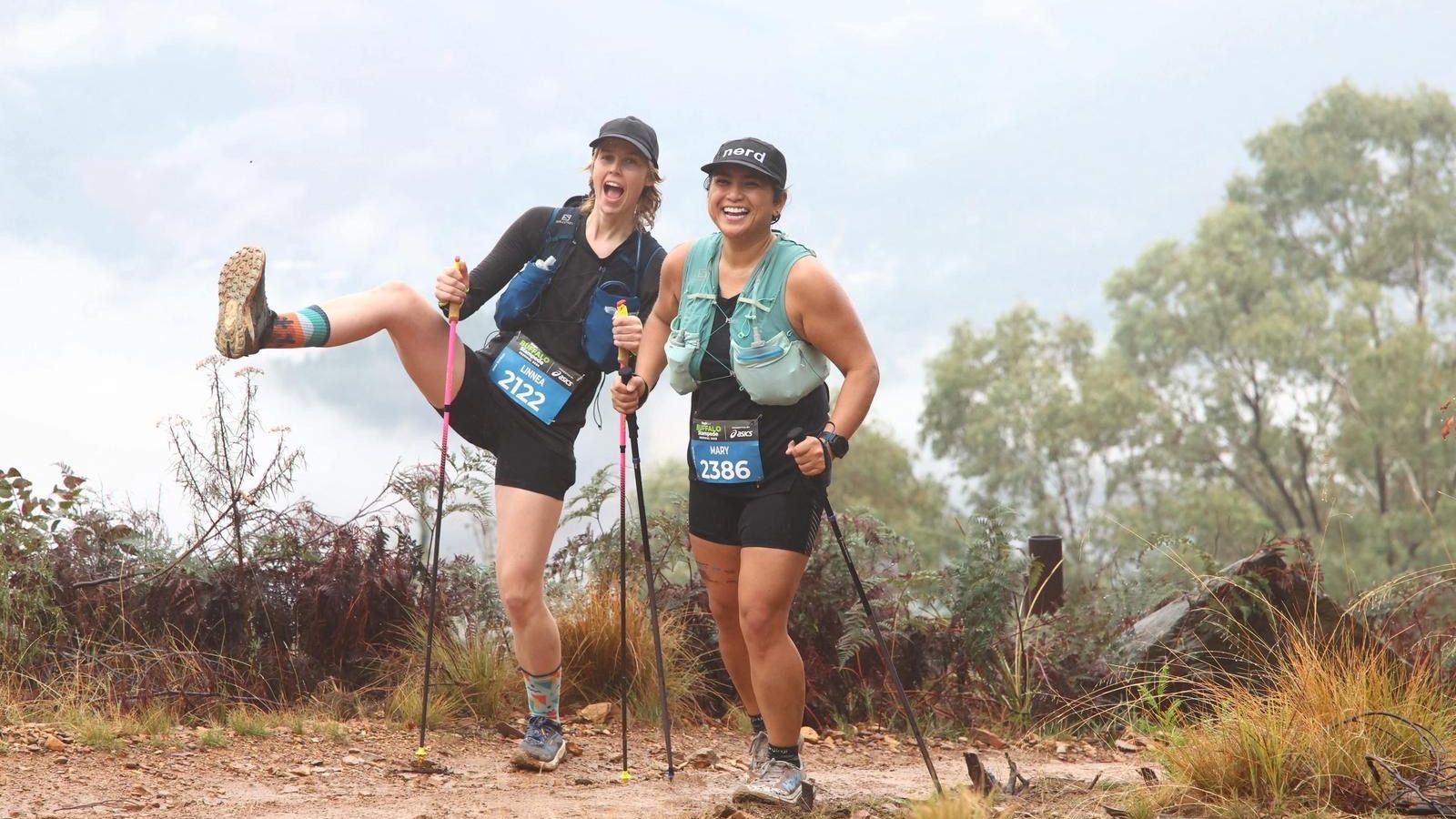
Running Poles: When and How to Use Them
Running Poles: When and How to Use Them
Poles aren’t just for alpine ultras. Used well, they can save your legs, improve efficiency, and even out your effort across a long race. Used poorly, they can slow you down, tangle your rhythm, or burn extra energy.
Here’s how to know when poles give you a true edge, and how to avoid the common mistakes.
When Poles Help Most
- Sustained climbs: Poles let your arms share the workload, giving your quads and glutes a break.
- Long ultras: The longer the race, the more energy saved by distributing effort.
- Technical descents: Poles add stability and reduce impact on knees.
- Fatigue stages: Late in a race, poles can help you keep moving forward when your legs are close to giving out.
Technique Basics
- Plant close, not wide: Keep poles near your feet to avoid wasted energy.
- Sync with steps: On climbs, plant with the opposite foot (left pole with right step) for natural rhythm.
- Use your core: Drive from the shoulders and core, not just your arms.
- Keep them short on climbs: Adjust pole length slightly shorter for uphill efficiency.
- Stay tall: Don’t hunch, good posture keeps breathing free and powerful.
Female-Specific Tips
- Upper body strength matters: Women may fatigue faster in the arms if poles aren’t trained with. That’s why at Her Trails, we design a Strength for Runners program across all our training plans, building full-body strength and mobility, not just leg endurance. This gives you the power to use poles effectively, without burning out your arms and shoulders.
- Rhythm practice: Women often have higher cadence: practise syncing poles to your natural stride, not forcing it.
- Grip comfort: Smaller hands can struggle with oversized grips; choose poles with adjustable straps and ergonomic handles.
Common Mistakes to Avoid
- Waiting until race day: Poles require practice. Train with them on long climbs and descents before your event.
- Over-reliance: Use poles to support, not to replace leg drive. They’re a complement, not a crutch.
- Inefficient carry: Learn to fold and stash poles quickly when you don’t need them: dangling poles break rhythm and waste energy.
- Wrong terrain: On short, rolling trails, poles can be more hassle than help.
How to Decide If You Need Them
Ask yourself:
- Does my race have sustained climbs or descents?
- Am I racing long enough that leg fatigue will be a limiter?
- Have I trained with poles enough to use them fluidly?
If yes, poles can be a game-changer. If no, leave them behind and save the weight.
Reflection Prompt
- Do poles add efficiency to my stride, or distraction?
- Where could I practise now so they become an advantage, not a burden?