
The Runnable Trap: Why the Easiest Ground Writes the Biggest Bill
Trail Notes | Female Athlete Racing
the easiest ground writes the biggest bill
The Runnable
Trap.
The most expensive terrain in a trail race is rarely the steep, technical climb you respect on sight. It is the gently rolling, soft and shaded path that whispers, you have plenty in the tank. Go.
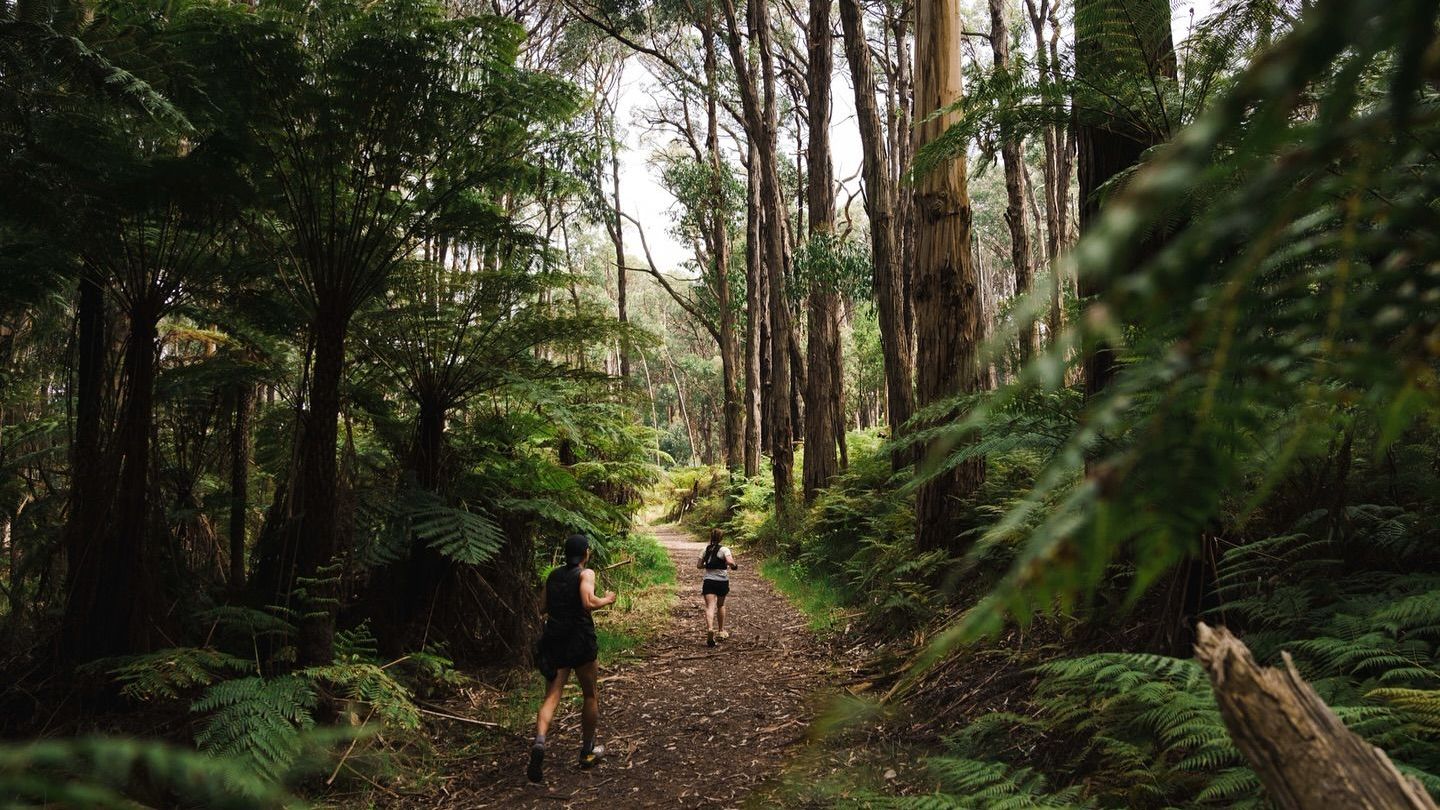
There is a pattern we see again and again in trail racing. The race begins on terrain that feels generous. The first kilometres are soft underfoot, runnable, often slightly downhill. Legs are fresh. The breath is easy. The watch shows a pace you would be thrilled to hold for the whole day.
So we run it. We run all of it. We pass people who look slower than us. We bank time against the climbs we know are coming. We tell ourselves we are being efficient, because efficiency is what good runners do.
And then, often hours later, the bill arrives. The legs feel hollow. The climbs we trained for feel longer than they should. The stomach starts to close. The day we expected to race well becomes the day we survive.
The runnable trap is the moment the trail feels generous and you believe it.
The damage is done long before you feel it. By the time you can name the mistake, the trail has already collected.
Trail Note · 01
Why the easy ground is the most dangerous
A steep, technical climb is honest. It tells you what it is. You see it, you respect it, you hike it. You arrive at the top with your heart rate where you expected it to be, because you chose your effort on the way up.
Runnable terrain does the opposite. It hides the cost. The watch shows good numbers. The breathing feels manageable. The legs feel fresh, because they are fresh. Everything in the data tells you, this is fine.
But effort and damage are not the same as pain. Glycogen drains quietly. Muscle fibres take micro-damage with every fast step on soft ground. Heart rate creeps up in heat or humidity without ever spiking. The body is writing a bill in pencil, and you cannot see it until you turn the page hours later.
The climbs warn you. The runnable ground does not. That is what makes it the most expensive terrain on the course.
Trail Note · 02
Fresh legs are not honest legs
In the first hour of a race, your legs will tell you almost anything you want to hear. They are rested, fuelled, warmed up, lifted by adrenaline and the energy of the start line. They are not a reliable signal of what your body can sustain for the rest of the day.
This is one of the central traps of pacing. We feel good, so we assume good will continue. But the first hour of a long trail race is not the day. It is the prologue. What you do in that hour quietly decides what is available in hour 5, hour 8, hour 12.
The athletes who race well in the back half are often the ones who looked, on the early runnable sections, like they were leaving time on the table. They were. On purpose.
Trail Note · 03
The myth of banking time
It is one of the most persistent stories in trail running. Run the easy ground hard so you have a buffer for later. Bank some time. Get ahead of the cut-offs. Build a cushion before the climbs.
But energy in endurance racing does not work like a bank account. You cannot deposit 5 minutes early and withdraw them at the third climb. The cost of running too hard early is not a flat tax. It is interest. It compounds. The minutes you gain in hour 1 can cost you far more in hour 6.
The runners who finish strong rarely describe the day as banking and spending. They describe it as protecting. Protecting the legs. Protecting the gut. Protecting the head. Protecting the option to still race in the final third.
What banking time actually buys
A heart rate that sits higher for the rest of the race.
A gut that closes earlier than it should.
Quads that feel smashed before the major descents.
A mental tank that runs dry around the time the course gets honest.
A finish where you survived, rather than raced.
Trail Note · 04
The downhill version of the trap
The runnable trap is not only flat ground. It also lives on the early descents. A long, smooth, runnable downhill in the first quarter of a race is one of the most expensive sections you will face all day. Your heart rate may not even register the cost. Your quads will.
Every downhill kilometre run fast on fresh legs is a deposit of eccentric load into muscle you will need later. That damage does not show up at the bottom of the descent. It shows up 2 or 3 hours later, when you go to lift a foot over a root and your leg simply does not respond the way it should.
Early descents are not a free ride. They are an invoice with delayed delivery.
Trail Note · 05
Heat and humidity rewrite the bill
In hot or humid conditions, the runnable trap gets sharper. Pace is a poor signal in heat. Your watch will show a number that looks reasonable while your core temperature climbs and your heart rate sits well above where it should be for that effort.
This is why effort-led racing matters more in humidity than anywhere else. The same kilometre on a cool morning and a humid morning are not the same kilometre. They cost different things. Your body knows. Your watch does not.
On runnable ground in heat, the temptation to chase pace is strongest, because pace is what feels achievable. Resist it. Read the breath, the rhythm and the way the air sits in your chest. Those are honest.
Her Trails coaching cue
In heat or humidity, treat pace as a lying friend. Treat breathing as the truth-teller. If you can hold a calm, full exhale, you are racing within yourself.
Trail Note · 06
Soft ground is not free ground
Soft sand, deep grass, pine needle paths, leaf litter and slightly muddy fire trail all look runnable. They are runnable. But they are not free. Every step on soft ground demands more from the calves, the hips and the deep stabilisers.
In the first hour of a race, you will not feel that cost. You will feel cushioned, springy, fast. By hour 4, the same surface will have taken a quiet tax on every muscle that holds your stride together.
Read terrain not only by what it asks of your watch, but by what it asks of your stride. Soft, runnable ground rewards a slightly shorter step, a calmer cadence and the discipline to let the surface set the pace instead of fighting it.
Trail Note · 07
The fuel mistake we make on easy ground
There is a second cost that hides inside the runnable trap. When terrain feels easy, fuelling often gets forgotten. The body does not feel hungry. The morning is cool. The pace is comfortable. Eating feels unnecessary.
But the body is burning regardless. Fuelling is not a response to effort you have already done. It is a deposit for effort you are about to do. The first runnable hour is exactly when the fuelling habit needs to be most reliable, not least.
A gut that is already a little behind, in a race already running a little hot, on legs already a little smashed from soft early kilometres, is the recipe for the third-quarter collapse so many athletes describe. Much of that collapse is not weakness. It is accumulation.
Her Trails coaching cue
Eat on the easy ground, starting in the first 30 to 45 minutes. The runnable, downhill, generous kilometres are the ones where fuelling is most possible. Do not save it for when the gut has already begun to close.
Trail Note · 08
What restraint actually feels like
Restraint, in the first hour of a trail race, often feels wrong. It feels like leaving time on the table. It feels like letting people past who probably should not be in front of you. It feels like you have trained for nothing if this is what the start of the day looks like.
That feeling is the feeling of doing it correctly. The first hour should feel slightly underwhelming. The breath should feel full. The legs should feel held back. The pace should feel like there is more available, because there is, and that is the point.
The discomfort of restraint at the start is the price of having anything left at the end. Pay it on purpose.
Restraint is not the absence of racing. It is the most skilled form of it.
Trail Note · 09
Effort is the steering wheel, pace is the speedometer
The fastest way out of the runnable trap is to stop letting pace drive the day. Pace is information. It is not instruction. On a flat, runnable section, pace will rise. On a climb, pace will fall. Neither is a verdict on how the day is going.
Effort, in contrast, is the variable you can hold steady across changing terrain. Effort accounts for heat, humidity, sleep, nerves, fuelling, surface, gradient and how the body actually feels under your ribs. Effort is honest in a way pace cannot be.
When you run by effort, you stop being lured by the easy ground. You give it what it deserves, no more. You give the climbs what they require, no less. You arrive at the back half of the race with something to spend.
Trail Note · 10
Read the course shape before you race
The strongest defence against the runnable trap is built the week before the race, not on the morning. If you know your course has 15 kilometres of soft, runnable ground at the start and 1,000 metres of repeated climbing in the second half, your job in those first 15 kilometres is not to race them. It is to get through them with as little cost as possible.
This is what experienced trail runners mean when they talk about racing the course shape, not the kilometres. 2 flat kilometres in the first hour and 2 flat kilometres in the last hour are not the same kilometres. They sit in different physiological neighbourhoods, even if the watch reads identically.
Before race day, walk the course shape in your head. Where does the temptation hide? Where will the runnable trap be set? Plan your restraint in those exact sections, before adrenaline gets a vote.
Where the trap usually lives
The first soft fire trail or grassy section after the start.
Any long, gentle descent in the first quarter of the race.
A flat, exposed section before a known climb.
A runnable connector between two climbs in the middle of the race.
The kilometre after every aid station, when the body feels briefly refreshed.
Trail Note · 11
The story we tell ourselves on the easy ground
The runnable trap is rarely a pacing problem. It is often a story problem. The trail feels good. We feel good. So we tell ourselves a story. Today is going to be a great day. I have to take this. I have trained for this. I cannot afford to give up time here.
That story is not a lie. It is just early. The day might end up being great. You probably are fit. You probably should not give up time on flat ground. But none of that means right now is the moment to spend.
A more useful story sounds like this. The trail feels good. So does my body. Both of those will still be true in an hour if I let them. My job right now is to make sure they are.
Trail Note · 12
If you have already overspent
Sometimes you will notice the trap only after you have stepped into it. The legs feel heavier than they should. The breathing is no longer easy. The watch shows a pace that you suddenly cannot quite hold without working harder than the moment deserves.
This is not the end of your race. It is information. The most important decision now is to downshift cleanly, before the cost compounds. Hike the next short climb, even if you could run it. Eat something familiar. Drink in small, regular sips, guided by thirst. Calm the breath. Slow the cadence. Let the heart rate settle before you ask the body for anything else.
Many strong finishes come from women who started slightly too hard and then chose, mid-race, to stop digging. Restraint, even when it arrives late, is still restraint. The trail will keep giving you chances to choose it.
Her Trails coaching cue
Noticing the trap is the way out of the trap. The minute you can name what is happening, you can stop digging the hole and start climbing out.
Trail Note · 13
The runnable check
When the ground beneath you turns runnable, run a short check inside your head before you let the legs decide what to do.
The Her Trails runnable check
Can I hold this effort for several more hours, not just this kilometre?
Is my breathing full and quiet, or audible and shallow?
Am I fuelling and drinking, or is the easy ground letting me forget?
Am I racing the people around me or the day in front of me?
If I imagine the hardest climb on this course, can I still see myself executing it well?
If the answers are honest and the answers are yes, run the runnable ground confidently. If even one answer wobbles, ease the effort by a notch and reassess in 5 minutes. The check costs you nothing. The trap can cost you the race.
Trail Note · 14
Why this matters more for women
For female athletes, the runnable trap can carry a second tax. Underfuelling in the first hour, when the body feels light and the trail feels generous, sits on top of the broader pattern of low energy availability that many of us already navigate.
Sleep, life load, training fatigue and stress all influence how generous a runnable kilometre actually is on any given day. Some women notice patterns across the month, and some do not. Track your own: we train the person, not the phase. The same flat section of trail might be sustainable on a Tuesday and unsustainable on race day. Effort-led running, calm fuelling and protected starts are how we account for that variability without panic.
This is not about being cautious. It is about being skilled. The runnable trap rewards an athlete who can read her own body alongside the trail, not just one or the other.
Trail Note · 15
The athletes who race the runnable ground well
If you watch the women who finish their races strong, you will often see something in common. They are rarely the first ones up the easy ground. They are calm in the opening hour. They eat early. They drink small and often. They let other runners go past without flinching.
And then, somewhere around the third quarter, they begin to appear. Steadier. Cleaner. Still capable of running technical descents that have left others shuffling. Still climbing with rhythm. Still eating, still drinking, still answering when you ask how it is going.
That is not luck. That is restraint, paid in full in the first hour, returning as capacity when it matters.
The easy ground tests your discipline more than the climbs test your fitness.
Restraint early. Effort over pace. Fuel on the kind kilometres. Trust the back half to come to you.
Trail Note · 16
The deeper rhythm
Trail racing is not won by the runner who is fastest on the easy ground. It is won by the runner who is still racing when the easy ground is long gone. That kind of running asks you to do something quietly counter-cultural in a sport that loves a fast start. It asks you to be patient when patience looks like loss.
The runnable trap is, in the end, a test of identity. Are you the runner who needs the early ground to prove something, or are you the runner who knows the proof comes later? Both choices are available on every start line. One of them gives you a back half worth racing.
Run the climbs the climbs deserve. Hike when hiking is faster. Eat on the easy ground. Drink little and often, guided by thirst. Let the watch be one signal among many. Trust the long, slow logic of effort over pace.
The invitation
The next time you line up for a race and the first kilometres feel generous, see them clearly. Recognise the trap before you fall into it. Hold the effort that lets the day come to you. Let the easy ground be easy, not expensive.
Because the runners who race the runnable ground with restraint are the ones who get to race the whole course. And the whole course is the only race worth running.
race the whole course, not the first hour
Written by the Her Trails coaching team
Trail Notes are evidence-informed coaching journals written for women who train, race and run on trails. Made to be absorbed in 10 minutes and remembered for a season.
Keep going with us