
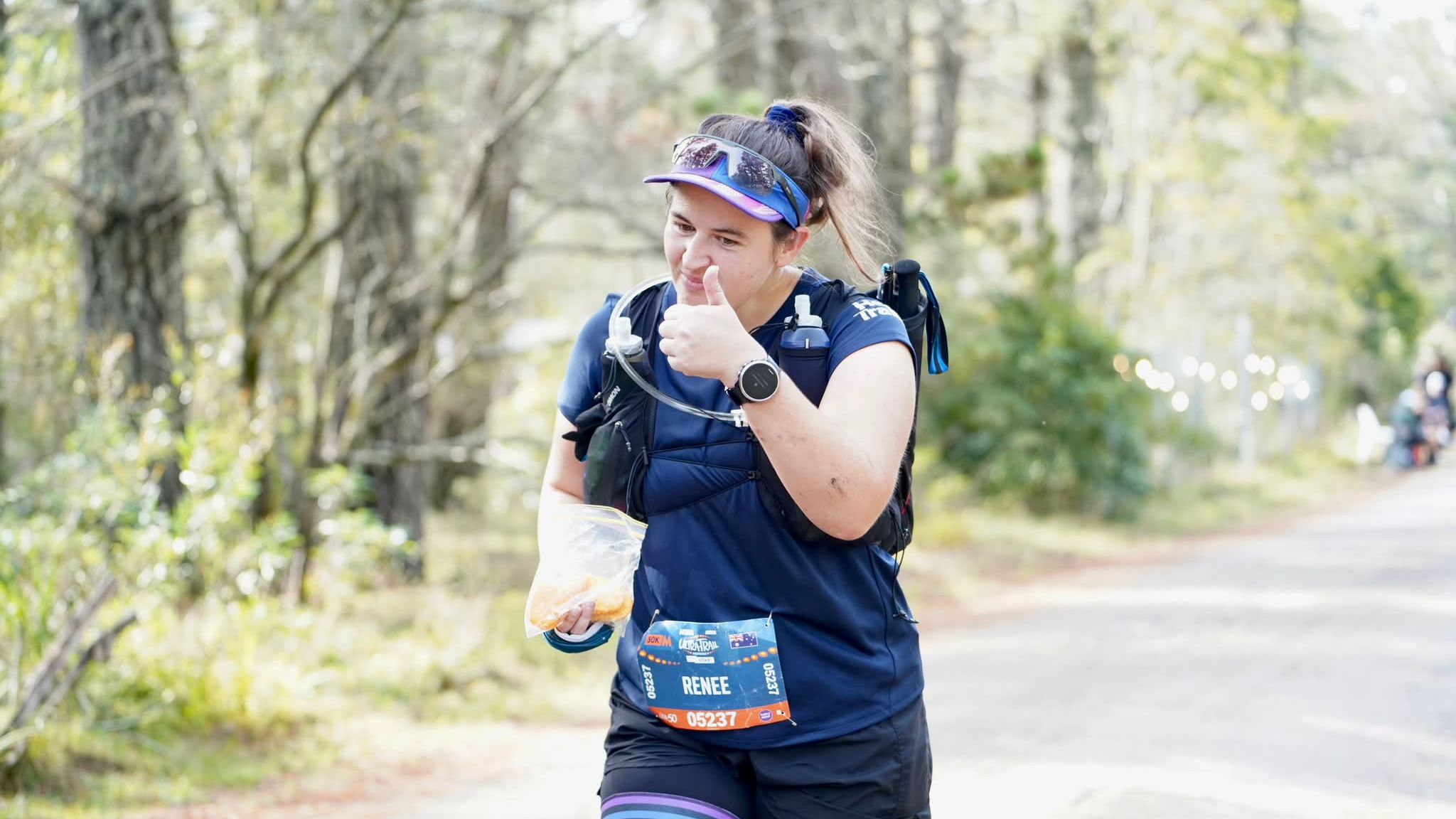
Fuelling for Female Ultra Runners
Trail Notes | Training Nutrition
a practical reference for women
Fuelling for Female
Ultra Runners.
This is a practical reference for female ultra runners. It covers daily intake, long-run fuelling, race nutrition, common mistakes and the female-specific factors that change how we should think about training nutrition. It is written to be used, not just read.
The numbers below are guidance ranges drawn from current sports nutrition consensus for endurance athletes. They are starting points, not prescriptions. Your individual needs depend on body size, training load, life stage, cycle phase, gut tolerance and history.
If you have a history of disordered eating, low energy availability, REDs, GI disease or any medical condition that influences nutrition, work with a sports dietitian. This article does not replace individualised care.
The short version
Eat enough across the day. Match carbohydrate to training load. Do not skip pre-run fuel. Practise race fuelling in training. Aim for 60 to 90 grams of carbohydrate per hour in racing, built up over months. Recover within 30 to 60 minutes of finishing. Do not under-eat as a strategy.
Section 01
Daily fuelling: getting the base right
Most fuelling problems in female ultra runners do not start in a race. They start in everyday under-eating. Your daily intake is the foundation. If the base is low, no race-day strategy will fix it.
A workable starting framework for a training female ultra runner:
Daily intake guidance
Carbohydrate
5 to 8 g per kg bodyweight on training days. Up to 8 to 10 g per kg on high-volume or back-to-back long-run days.
Protein
1.6 to 2.2 g per kg bodyweight, spread across 4 to 5 meals or snacks of roughly 25 to 40 g.
Fat
Around 1 g per kg as a minimum. Important for hormones, satiety and absorption of fat-soluble vitamins.
Energy availability
Aim to keep energy availability above 45 kcal per kg fat-free mass per day. Below 30 is the threshold most strongly linked with REDs.
Iron and ferritin
Test annually at minimum. Many female endurance athletes run low. Treat under guidance of a doctor or sports dietitian.
Hydration baseline
30 to 40 ml per kg bodyweight daily, plus replacement for sweat losses in training.
Ranges adapted from current IOC and sports nutrition consensus guidance for endurance athletes. Adjust to individual context.
Section 02
Carbohydrate periodisation by session
Not every session needs the same fuelling. Match carbohydrate to the demand of the work.
Easy run, under 60 min
Eat normally before and after. Water during is usually enough.
Moderate run, 60 to 90 min
Pre-run snack with 30 to 60 g carbs 1 to 2 h before. Begin fuelling in-run if effort is moderate to hard.
Long run, 2 to 4 h
Pre-run meal with 1 to 3 g carb per kg, 2 to 3 h before. In-run: 30 to 60 g carbs per hour for women new to fuelling, working towards 60 to 90 g.
Long run, 4 h+
Treat as race rehearsal. Aim 60 to 90 g carbs per hour. Practise mixed carbohydrate sources, sodium, real food and gels in combination.
Strength session
Eat carbs and protein before and within 60 min after. Do not lift fasted on a regular basis.
Recovery day
Maintain protein and overall energy. Carbs can be slightly lower but should not drop dramatically.
Section 03
In-run fuelling targets
Carbohydrate intake during running is one of the most reliable performance levers. Most female ultra runners under-fuel during long efforts. Build this skill gradually. Do not jump to 90 g per hour without training the gut to handle it.
Carbs per hour during running
Under 60 min
0 to 30 g per hour, optional. Mouth rinse only is fine for shorter efforts.
60 to 120 min
30 to 60 g per hour from a single carbohydrate source such as glucose or maltodextrin.
2 to 3 h
60 g per hour as standard. Begin using mixed carbohydrate (glucose + fructose) to improve absorption.
3 h+
60 to 90 g per hour using a glucose-to-fructose ratio of about 2:1 or 1:0.8. Higher intakes require trained gut tolerance.
Ultra (50 km+)
60 to 90 g per hour, with planned shifts to real food, savoury options, soup or broth as the race progresses.
Spread intake across the hour rather than taking a large amount at once. Most athletes tolerate small servings every 15 to 20 minutes far better than one large hit per hour.
Section 04
Hydration and sodium
Hydration needs vary enormously. Do not copy what a male teammate is drinking. Test your sweat rate by weighing before and after a one-hour run in similar conditions to your race.
Fluid during running
400 to 800 ml per hour as a typical range. Adjust up in heat. Do not drink to a fixed plan if you are not thirsty and not sweating.
Sodium during running
300 to 700 mg per hour as a starting range. Heavy or salty sweaters may need 800 to 1200 mg.
Sweat rate test
Weight loss per hour (kg) x 1000 = ml of sweat lost per hour. Replace 50 to 80 percent during, the rest after.
Hyponatremia risk
More common in women, especially in long ultras. Caused by drinking too much plain water without sodium. Symptoms include nausea, headache, swelling, confusion.
If you are gaining weight during an ultra, you are drinking too much. Slow down fluids and increase sodium.
Section 05
Pre-run and pre-race fuelling
Pre-race intake matters more than most runners realise. Race-morning nerves often push women to eat less than they need. That is one of the most common reasons for an early bonk.
Race-morning timing
3 to 4 h before
Main meal: 1 to 3 g carb per kg. Familiar foods, low fibre, low fat, moderate protein. Examples: oats with banana and honey, white toast with jam, rice with eggs.
60 to 90 min before
Top-up snack: 30 to 60 g carbs. Banana, sports drink, small portion of toast or a sports bar.
15 to 30 min before
Final top-up: a gel or 200 to 300 ml of sports drink if it sits well in training.
Race start fluid
5 to 7 ml per kg, two to four hours before. Sip, do not gulp.
Caffeine
3 to 6 mg per kg, 30 to 60 min before, only if practised in training. Do not introduce caffeine on race day.
Avoid new foods, high-fat dishes, high-fibre meals or large portions you have not tested. The race-week kitchen is not the time for experiments.
Section 06
During the ultra: a usable race plan
Build a written hourly plan and rehearse it. Use a vest pocket card, a watch screen reminder, or a crew sheet. Do not rely on memory under fatigue.
Hourly race-day template (50 to 100 km)
Hour 1 to 2
60 g carbs. Mostly liquid or gel. Drink to thirst. Do not under-fuel because you feel fresh.
Hour 3 to 5
60 to 80 g carbs. Begin alternating sweet and savoury. Add solid food at aid stations: rice balls, sandwiches, salted potatoes.
Hour 5 to 8
60 to 90 g carbs. Soup, broth and warm food often become more palatable. Watch sodium closely.
Hour 8+
Eat what you can keep down. Lower sweet, increase salt and simple savoury carbs. Maintain at least 30 to 40 g per hour even if appetite drops.
If the gut shuts down, simplify. Walk for 5 to 10 minutes, sip flat cola or broth, return to small frequent sips. Do not stack fuel on top of a closed stomach.
Section 07
Recovery fuelling
Recovery starts the moment you stop running. Female athletes appear to be more sensitive to inadequate post-exercise refuelling. Do not wait until you feel hungry to eat.
Within 30 to 60 min
1 to 1.2 g carb per kg plus 0.3 to 0.4 g protein per kg. Example: yoghurt and granola, recovery shake, sandwich with eggs.
Within 2 to 3 h
A balanced meal with carbs, protein, vegetables and some fat. Eat enough that you do not feel like grazing all evening.
Fluid replacement
125 to 150 percent of weight lost, spread over 4 to 6 hours. Include sodium and food, not water alone.
Bedtime
After very long sessions, a 20 to 40 g protein snack before sleep supports overnight muscle repair.
Day after
Keep eating well. One good meal does not finish recovery from a long ultra. Full glycogen restoration can take 24 to 48 hours.
Section 08
Female-specific considerations
Female physiology changes nutrition demand. The cycle, pregnancy, postpartum and perimenopause all shift the picture.
Luteal phase (pre-period)
Resting metabolic rate may rise slightly. Protein turnover is higher. Body temperature is higher. Increase protein towards the upper end of the daily range and consider an extra meal or snack.
Menstruation
Iron loss is real. Pair iron-rich foods with vitamin C. Test ferritin annually. Hydrate generously.
Perimenopause
Protein needs may shift higher (2.0 to 2.2 g per kg). Carbohydrate timing around training becomes more important for recovery and body composition stability.
REDs / low energy availability
Warning signs: missing periods, recurrent injury, poor sleep, low mood, persistent fatigue, frequent illness. Seek qualified support.
Fasted training
Female ultra runners tolerate frequent fasted sessions poorly. Use sparingly, if at all. Easy under 60 min only, never in luteal phase or during high-stress weeks.
Be cautious with trends that advocate routine fasting, very low carbohydrate intake or aggressive restriction. The evidence base supporting these approaches in female endurance athletes is weak. The evidence supporting their harms is growing.
Section 09
Gut training
The gut is trainable. If you cannot tolerate 60 to 90 g of carbohydrate per hour, that is a training problem, not a fixed limit. Build tolerance the same way you build mileage: progressively and consistently.
A simple progression
Weeks 1 to 2
30 g per hour on long runs. One carb source only. Note any GI symptoms.
Weeks 3 to 5
45 to 60 g per hour. Introduce mixed-carb products (glucose plus fructose).
Weeks 6 to 8
60 to 75 g per hour. Add real-food trial in last hour of long runs.
Weeks 9+
75 to 90 g per hour. Practise full race-day intake on back-to-back long days.
If GI distress is consistent, look at fibre intake in the 24 hours pre-run, fat content of pre-run meals, hydration concentration, and running pace at the time of fuelling. These four factors explain most race-day gut problems.
Section 10
Common mistakes
What to watch for
Under-eating daily
Long-term restriction kills adaptation, recovery, hormones and immunity.
Skipping breakfast pre-long
Sets the run up to fall apart in the second half.
Too much fibre on race week
Reduce intake from 2 days out. This is not the week for kale and lentils at every meal.
New products on race day
Aid stations and goodie bags are full of items you have never trained with. Carry your own.
Drinking only water
In long ultras this is one of the fastest routes to hyponatremia. Include sodium.
Late-race deficit chasing
You cannot make up a 500-calorie hole at hour 6. Front-load fuelling.
Trusting wearables alone
Calorie estimates from watches are unreliable, especially for women. Use them as rough trend data, not exact figures.
Section 11
Worked examples
To illustrate how the numbers play out, here are two example athletes. These are templates, not prescriptions. Adapt to your context.
Example 1 · 60 kg athlete, 50 km race
Daily training: 300 to 480 g carbs, 95 to 130 g protein, 60 to 80 g fat.
Pre-race breakfast (3 h out): 90 g carbs, e.g. oats with banana, honey and a coffee.
Pre-race top-up (45 min out): 30 g carbs, e.g. a gel and small sips of sports drink.
In-race fuelling: 60 to 75 g carbs per hour. Roughly two gels plus 500 ml of sports drink each hour, with savoury aid-station food from hour 3.
Sodium: 400 to 600 mg per hour depending on heat.
Example 2 · 65 kg athlete, 100 km race
Daily training (peak weeks): 450 to 600 g carbs, 110 to 140 g protein, 70 to 90 g fat.
Pre-race breakfast (3 to 4 h out): 100 to 130 g carbs, e.g. rice with eggs and toast with jam.
In-race fuelling: Target 75 to 90 g carbs per hour for the first 8 to 10 hours, then accept 30 to 60 g per hour as appetite and gut allow.
Fluid: 500 to 700 ml per hour, adjusted to temperature and sweat rate.
Sodium: 600 to 900 mg per hour. Higher if a heavy sweater or in heat.
Section 12
When to get help
There are situations where self-managed fuelling is not appropriate. Work with a sports dietitian or qualified clinician if any of the following apply.
You have missed three or more consecutive periods.
You have a history of disordered eating, restriction or compulsive exercise.
You are experiencing recurrent stress fractures or chronic injuries.
You feel persistently fatigued, low or unable to recover from sessions.
You are pregnant, postpartum or breastfeeding.
You have a diagnosed GI condition or food allergies.
You are entering perimenopause and noticing significant shifts in recovery, sleep or body composition.
Asking for support is not a weakness. It is good practice. The athletes who fuel best across the long term almost always have a qualified person checking their work.
Section 13
Final checklist
Daily intake hits carbohydrate, protein and fat ranges for your bodyweight.
You eat before long runs and recover within 60 minutes after.
Long-run fuelling matches race-day targets and gut tolerance is trained.
You have a written hourly race plan with carbs, sodium and fluid targets.
You know your sweat rate and have tested your sodium needs.
Iron and ferritin have been checked in the last 12 months.
You are not using fasting, restriction or low-carb approaches without qualified support.
A note on personal plans
If you want a plan built for you
The numbers in this guide are starting ranges. They are not a replacement for an individualised plan. If you want fuelling that is tailored to your physiology, your training load, your race demands and your gut, we recommend working with an accredited sports dietitian.
Her Trails recommends Tamara Madden of Madden Nutrition. Tamara works with female endurance athletes, understands the demands of trail and ultra racing, and builds practical, evidence-based plans that adapt to where you are in life and training.
Recommended Sports Dietitian
Tamara Madden
Madden Nutrition · Personalised fuelling for female endurance athletes
Visit Madden Nutrition →Keep going with us