
Her Trails Coaching
Kunanyi Ultra Solo 66km
Circumnavigate the mountain, own the whole day
A 20-week female-first training program built for the Kunanyi Mountain Run Ultra Solo: 66km and 3,770m of climbing and descending around the full circumference of kunanyi. Includes front-loaded climbing capacity, technical descending, exposed scrambling preparation, pacing across a full day and night, fuelling for a 17.5 hour cutoff window, and weekly coaching calls.
The Course
Training for the Kunanyi Ultra Solo 66km
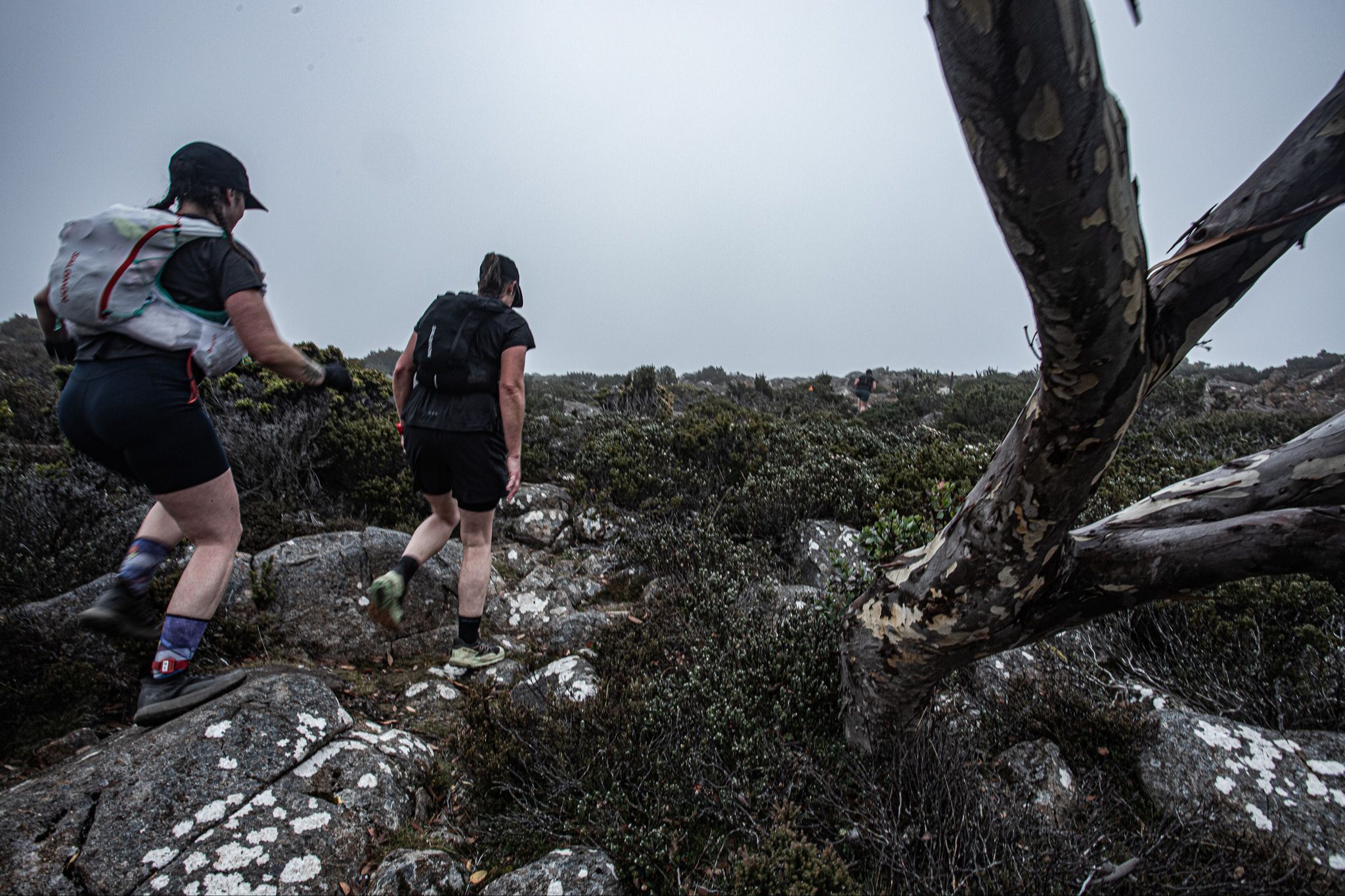
The Ultra Solo circumnavigates kunanyi, heading down and up each valley in turn. It climbs the famous Organ Pipes Track before the wind-scoured pinnacle plateau, drops through snow gums and old growth eucalypt into rainforest, then crosses the exposed, scrambly Montagu Thumbs traverse before the long run home. Many finishers describe it as trail running heaven and one of the toughest days they have had on foot in the same breath.
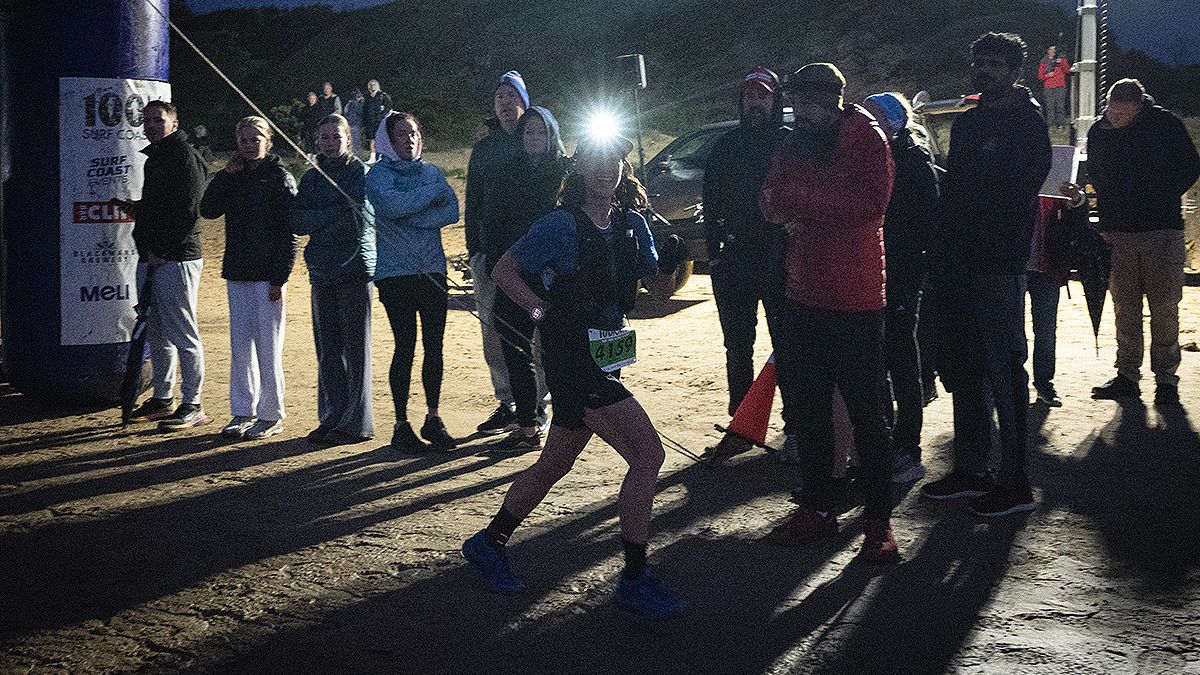
This is not a course you run start to finish at one effort. The first 12.2km alone climbs 1,350m, more vert than most runners see in an entire 50km race. From there the terrain keeps changing character every 10 to 15km: fast fire trail, technical single track, a 900m straight-down descent, an exposed ridgeline requiring hands-and-feet scrambling, then a long final stretch back to town that some finishers run in daylight and others finish by headlamp.
This program builds more than fitness for the distance. It builds the specific climbing capacity to front-load 1,350m without blowing up, the descending strength to handle a 900m straight-down leg on the same day, the exposure confidence for scrambling terrain, and the pacing literacy to manage a course that can take anywhere from 9 to 17 hours depending on who is running it.
The Six Legs
What you will actually run
The Ultra Solo course breaks into six legs, each with its own character, its own cutoff, and its own demands. Knowing what is coming, and training for it specifically, is what separates a controlled day from a survival day.
Leg 1
Runhub to Pinnacle
12.2km, 1,350m up, 190m down
Out of the Runhub, through silver peppermint forest and fire trail, then onto single track through ferns and waterfalls up Myrtle Gully. The climb continues through big eucalypts and dolerite boulder fields to the Chalet, then the flowing Organ Pipes Track before the final stone-pitched Zig Zag climb onto the wind-scoured pinnacle plateau.
Demands: sustained climbing from the gun, power-hiking economy, pacing discipline before the day has properly begun.
Leg 2
Pinnacle to Myrtle Forest
12.0km, 320m up, 1,030m down
Off the Pinnacle and down Big Bend Fire Trail over the back of the mountain, past Collins Peak and Sleeping Beauty. Technical single track over Mt Connection through alpine marsh and snow gums, a short rock slab slide, then a climb onto Collins Bonnet before dropping through old growth eucalypt and rainforest to the aid station.
Demands: technical single track descending, exposed alpine terrain, sustained concentration after the opening climb.
Leg 3
Myrtle Forest to Mountain River
12.4km, 570m up, 930m down
Back up through rainforest and waterfalls, over Collins Fire Trail and the undulating East West Fire Trail across Sleeping Beauty's neck, then the biggest descent of the day: 900m straight down old and rocky Mountain River Trail to the farming valley below.
Demands: quad strength for a sustained 900m straight-down descent, downhill technique on loose fire trail.
Leg 4
Mountain River to Cathedral
10.9km, 910m up, 840m down
Farmland ridges give way to the steep Old Montagu Trail, climbing through dry then wet eucalypt into alpine scrub. Then the Montagu Thumbs traverse: a sharp, exposed ridgeline with 360 degree views and a heap of short, sharp scrambling ups and downs, ending atop Cathedral Rock before a steep drop to the aid station.
Demands: hands-and-feet scrambling, comfort with exposure, technical decision-making on tired legs 47km in.
Leg 5a
Cathedral to Fern Tree
11.2km, 415m up, 250m down
A short, steep climb up a fire trail locals call Siphon's ugly cousin connects to the Pipeline Track: 7km of comparatively flat, fast running, then a final climb through ferny gully to the Fern Glade track down to the aid station.
Demands: finding rhythm again after the technical grind of Leg 4, running efficiently on tired legs.
Leg 5b
Fern Tree to Runhub
7.4km, 205m up, 530m down
Past century-old stone arches on the Pipeline Track, a final zigzag climb with a last view of the Organ Pipes, then down through Waterworks Reserve past Gentle Annie Falls to the finish. Depending on pace, this leg is run in daylight or by headlamp.
Demands: composure in low light if it comes to that, and finishing with something left for the last climb.
How We Train For It
Course-specific preparation, not generic endurance
A course this varied is not trained with one type of long run. Each phase of the program targets a different demand of the six legs, so nothing about race day feels unfamiliar.
Front-loaded climbing
Leg 1 alone climbs 1,350m in 12.2km, straight off the start. Peak-block long runs are built to reproduce exactly this: a huge climb before the legs are warm, so it feels rehearsed rather than shocking on race day.
Exposed scrambling
The Montagu Thumbs traverse on Leg 4 asks for hands-and-feet scrambling on an exposed ridgeline, 47km in. We build this confidence progressively on technical terrain long before race day arrives.
Sustained technical descending
Leg 3's 900m straight-down Mountain River Trail is a quad-destroyer if it is not trained for. Downhill-specific strength and descent drills build the eccentric strength to handle it without damage.
Fuelling for the full day
With a midnight cutoff and six aid stations spread across 66km, fuelling and sodium strategy get tested at volume on Peak-block long runs, so what works is known well before race day.
Alpine weather resilience
The pinnacle plateau runs roughly 10 degrees cooler than the city, with regular wind. We build cold and wind acclimatisation into training so a change in conditions does not change your race.
Late-race composure
Legs 4 and 5 arrive deep into the day, sometimes into the night, on tired legs and technical terrain. We train problem-solving and pacing discipline for exactly this stretch, so the final third is managed, not survived.
What's Included
Everything you need, in one place
Your training, strength, recovery and coaching live in one integrated platform. Nothing is bolted on.
Training Program
- ●Progressive 20-week Ultra Solo program built for kunanyi's full-circumference profile
- ●Sessions structured around women's physiology and cycle rhythm
- ●Technical descending and exposure confidence progressively built
- ●Deload and absorption weeks planned into the periodisation
- ●Power-hiking strategy, fuelling and mandatory gear practice
Coaching + Community
- ●Weekly live coaching calls on Tuesday and Thursday
- ●Join live or watch recorded sessions on your schedule
- ●Community hub with peer support and accountability
- ●Email coaching support through race day
Common Questions
What runners ask before they start
Do I need trail experience or can I be new to trails?
The Ultra Solo is for experienced trail runners. KMR asks entrants to self-assess their skills and confidence with exposure and scrambling before registering, and this program assumes solid trail fitness to build from. If you are newer to trails, reach out first so we can advise on the best entry point.
How does the program handle the Montagu Thumbs scrambling section?
We build technical terrain and exposure confidence progressively through the Build and Peak phases, using rocky and exposed sections in your training area where possible. Your coach can also point you to Hobart-based training runs on the actual course during the festival's training weekend.
Can I adjust the start date?
Yes. Content releases weekly from Monday 2 November 2026, but if you are joining partway through, or your baseline fitness suggests a different entry point, let us know and we will set this up for you along with guidance based on where you are starting from. Coaching calls are recorded, so you can join live or catch up on your own schedule.
What's the time commitment per week?
Peak week (week 16) is your biggest, with several hours of vertical-focused training depending on your fitness level and pace (a mix of runs, strength and recovery). Base and deload weeks are considerably lighter. Each workout has a prescribed duration, and your coach can adjust volume to your capacity.
Is this group coaching or individual?
It's structured group coaching with one shared program and twice-weekly live calls. Our coaches can advise on 1:1 customization options if needed for specific circumstances.
Also Worth Considering
Running more than one race this season?
Instead of purchasing individual programs, many runners choose the Her Trails All-In Membership for broader training support across the year. If you plan multiple races or want flexibility between programs, the All-In Membership is usually the most cost-effective option and gives our coaching team the ability to support you across training blocks and transitions.
Best Value
Her Trails All-In Membership
$220 / quarter
- ✓Access to every Her Trails program including trail, road and strength
- ✓Community and coaching platform with weekly coaching calls
- ✓Strength and mobility training for runners
- ✓Coaching support between races and training blocks
- ✓Ongoing community support and accountability
- ✓Discounts on merchandise and selected partner opportunities
Questions before you commit?
Choosing a program is a real commitment of time and energy, and it is normal to want to talk it through first. Here are a few places to start.
We can connect you with an All-In member for a relaxed call about the program, fitting training around work and family, or anything else on your mind.
Request a chatOr browse all our programs