
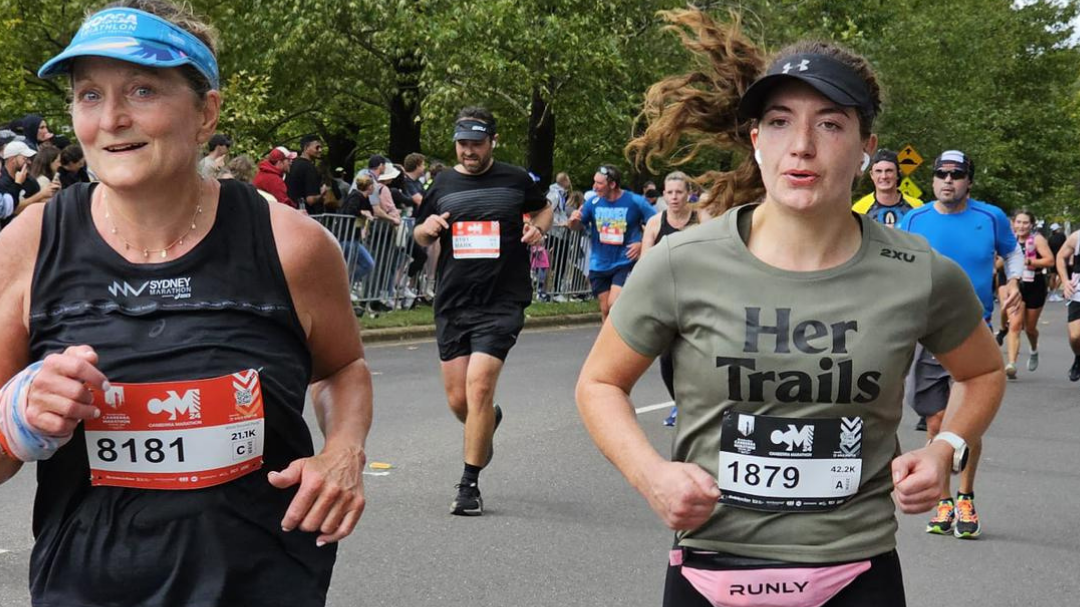
How to Pace a Marathon
How to Pace
a Marathon
The marathon does not reward the runner who is fastest in the first ten kilometres. It rewards the one who is still running her own race at thirty five.
What the research is showing
Over the last decade, large datasets from major city marathons and a growing body of female specific physiology research have changed how we think about pacing. The story that keeps appearing is consistent. Women, on average, pace marathons more evenly than men, and that evenness produces stronger second halves and faster finishing times relative to the early kilometres.
Pacing discipline is partly behavioural. It is also physiological. The way the female body manages fuel, fatigue and muscular load during long efforts shapes what an even race actually feels like, and why it tends to work.
Why even pacing favours women
Analyses of large international marathon fields consistently show that male runners are more likely to slow significantly in the second half. Women, on average, hold pace more steadily and lose less time after the thirty kilometre mark. The mechanism is not single. It is a combination of fuel use, fatigue resistance and decision making under load.
How to pace by effort, not just pace
A goal pace is useful as a guide. It is not the race. On the day, weather, sleep, fuelling, hormonal phase and emotional state all influence what that pace will cost. Internal cues stay accurate when conditions change. Pace alone does not.
The strongest marathon performances tend to come from runners who can read effort across three layers at once. Breath, leg feel, and perceived exertion. Those three together tell you whether the pace you are running is sustainable for another twenty kilometres, or whether you are already paying a deposit you cannot afford.
Fuelling supports the pacing plan
Pacing and fuelling are the same conversation. A disciplined first half is only sustainable if carbohydrate intake meets the work being done. Late race slowing is often a fuelling failure dressed up as a pacing failure.
Spread intake across the hour rather than taking a large amount at once. Most athletes tolerate small amounts at regular intervals far better than infrequent larger doses. Hydration runs alongside this and should be planned by sweat rate and conditions, not by thirst alone.
Effort awareness across the cycle
Recent female specific research has explored how hormonal fluctuations may influence perceived effort, thermoregulation and recovery. Overall marathon performance appears relatively stable across the menstrual cycle, but the felt sense of the race can shift. On some days a familiar pace feels heavier, breath rises sooner, the legs respond more slowly to a hill.
This is one of the strongest arguments for pacing by internal cues. A runner who has learned to read her own breath, cadence and effort across training cycles arrives at the start line able to adjust without panic. The plan is the plan. The body is the truth.
Common pacing mistakes
Coaching takeaway
The marathon rewards runners who allow the race to unfold gradually. Even pacing, controlled early effort and stable energy management give training the best chance to appear in the final kilometres. The strongest marathon performances are rarely produced by aggressive early pacing. They are built through patience, internal awareness and consistent fuelling across the full distance.
Pacing is a skill. Like every skill, it improves with deliberate practice. Long runs, race rehearsals and tempo work are all opportunities to learn how your body responds to sustained effort. Bring that knowledge to the start line and the second half of the race will look after itself.
Coaching that holds the whole picture
Structured training, fuelling guidance, female specific programming.
Community Group Runs
Wednesday and weekend sessions across Melbourne. All paces welcome.
View the scheduleEvent Based Programs
Structured builds for road and trail. Marathon, ultra, and back of pack inclusive.
See upcoming programs