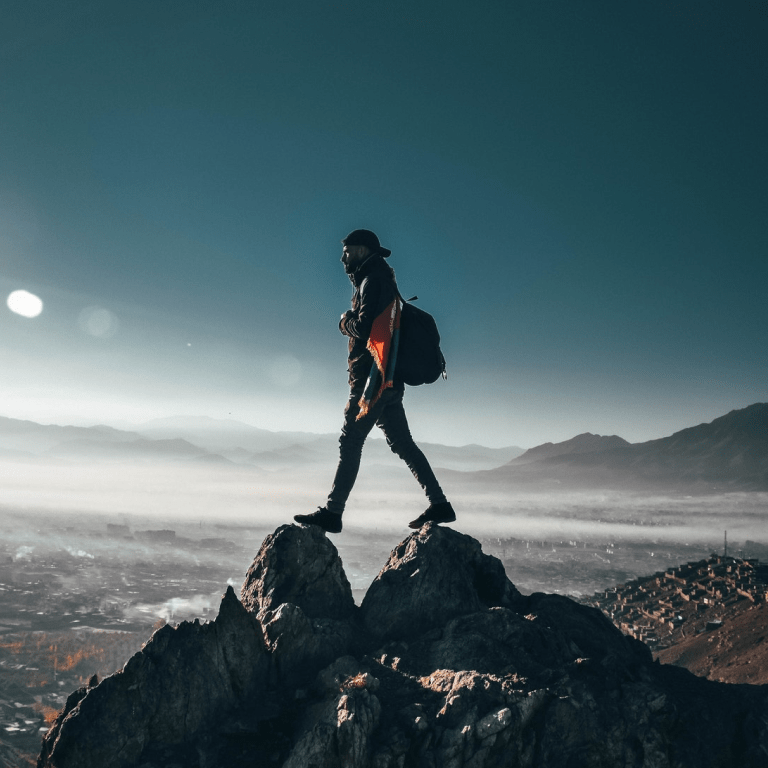
Night Running: How to Make the Dark Familiar
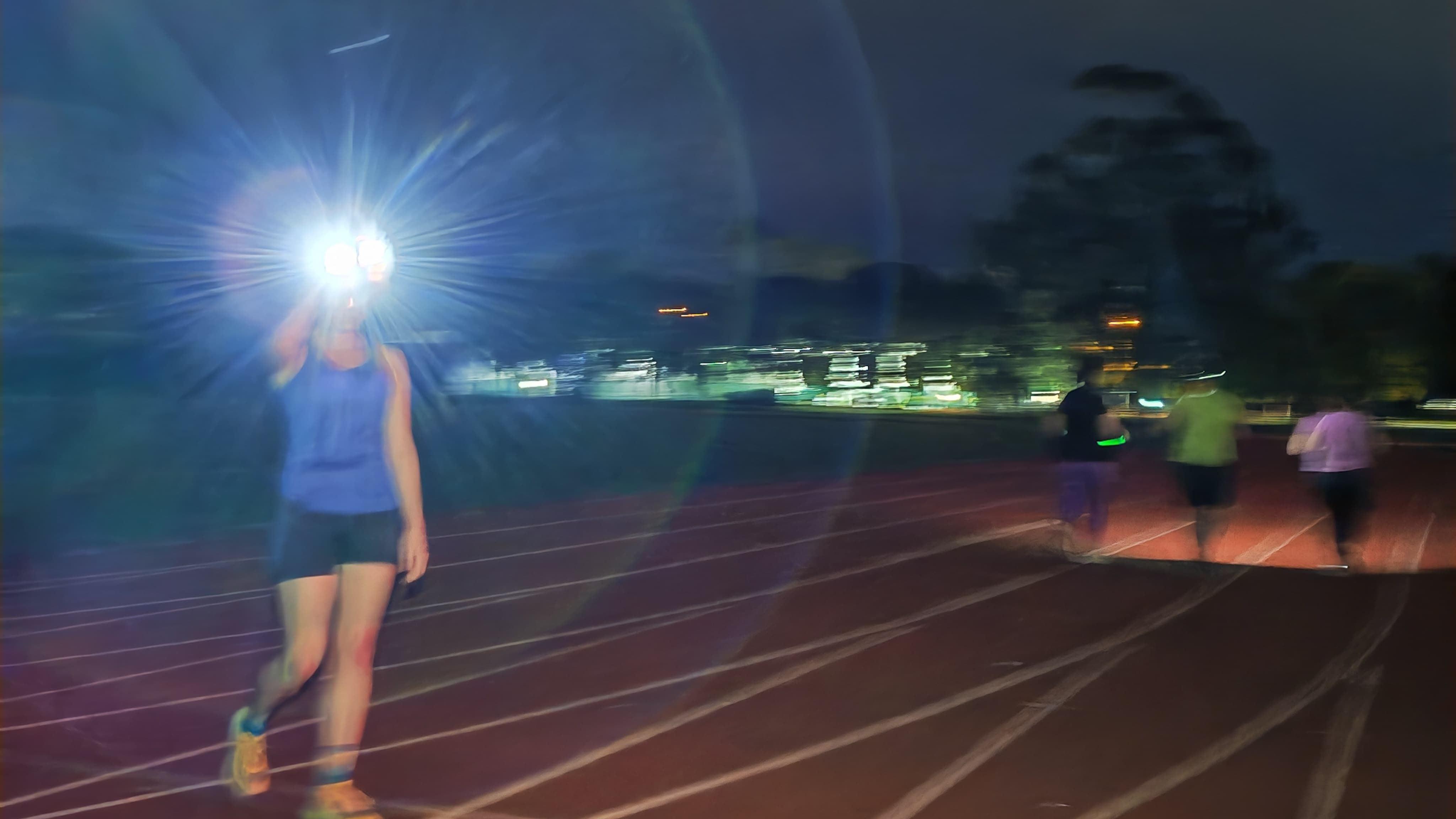
Trail Notes | Female Athlete Racing
when the trail goes dark
Night Running
how to make the dark familiar
At some point in your first 100km ultra, the sun is going to set and you are going to keep moving. The trail will look different, feel different, and ask something different of you. This Trail Note is your preparation for that moment, starting long before race day.
Trail Note · 01
Why Night Running Feels So Different
Your brain is doing more work than you realise during a daytime run. It is constantly scanning ahead, reading shadows and contours, processing the full peripheral picture. At night, that picture narrows to a single bright circle on the ground in front of you. The rest drops away. That is a significant shift in how you move, how you make decisions, and how much mental energy you burn.
The first thing most runners notice is that terrain reading changes completely. The flat lighting of a headlamp beam washes out depth and shadow, which means roots, rocks, and small undulations become much harder to read. There is also the psychological weight of darkness itself. Your sense of scale changes. Distances feel longer. Sounds become louder. Your nervous system is calibrated to be more alert in low light, which can work for or against you depending on your preparation.
"Night running is not a different sport. It is the same sport in a new context. Your job is to make that context familiar before race day."
Every runner who looks confident in the dark got there through deliberate, progressive exposure. It is a skill, and skills are trainable.
Trail Note · 02
Choosing Your Headlamp: What Actually Matters
For trail running in the dark, you need a minimum of 300 lumens for anything beyond a groomed path, and for technical single-track or rocky terrain, 400 to 600 lumens gives you the beam distance and flood width to see what you need to see. Beam pattern matters as much as brightness. A pure spot beam is great for seeing far ahead but leaves your peripheral vision in total darkness. Look for a lamp with a wide flood component alongside its throw.
Battery life is another practical consideration. Know your lamp's runtime at the lumen setting you actually use, not the maximum setting. Test your exact lamp under your exact conditions before race day. Carry a backup light, always.
Headlamp checklist for 100km+ racing
Primary lamp: 300 lumens minimum, preferably 400 to 600 for technical trail. Test beam pattern, not just brightness numbers on the box.
Battery life: calculate your expected time in the dark plus a 20% buffer. Carry spare batteries or a spare charged lamp from your drop bag.
Backup light: a second lamp in your race vest at all times.
Fit: a headlamp that bounces on your head is frustrating and fatiguing over hours. Test it running before race day.
Trail Note · 03
Your Progressive Exposure Plan
The single most useful thing you can do to prepare for night running is to accumulate actual time in the dark before race day. Not on a treadmill. Not imagining it. On a trail, with your lamp, in the dark. Start with 20 to 30 minutes at dusk on a trail you know well. Once dusk feels manageable, move to a full-dark session. Progress from short familiar sessions to longer efforts, and eventually include at least one session that takes you through the 10pm to 2am window.
Her Trails coaching cue
Use the progressive exposure ladder: dusk on familiar trail (20-30 min), then full dark on familiar trail (45-60 min), then an evening session through the 10pm window, then a supported night run with other athletes. Each step builds the one before it.
Trail Note · 04
The Circadian Dip: Understanding 3am
Between roughly 3am and 5am, your body experiences its lowest core temperature of the day and its deepest circadian trough. Sleep drive is at its peak. Cognitive function drops. Mood tends to be lowest. If you are mid-race in this window, this is not your fitness failing you. This is human physiology doing exactly what it is programmed to do, and it happens to everyone on the course at the same time.
Knowing it is coming changes your relationship to it. It becomes an expected part of the experience rather than a signal that something is wrong. Practical strategies for this window include a planned caffeine dose taken roughly 30 to 45 minutes before you expect to hit the trough, a warm drink and a hot food option at your 2am or 3am checkpoint, and a new playlist or podcast you have been saving for this exact moment.
"The 3am low is not a crisis. It is a weather system. You know it is coming, you have prepared for it, and you move through it."
Every 100km runner who has finished one knows this feeling. Most of them will tell you: the hardest hour of the race was 3am. And they finished anyway.
Trail Note · 05
Safety and Solo Night Running
Running alone at night on a trail introduces a different set of considerations than daytime solo running. For your early night training sessions, familiar trails with good mobile phone coverage are a practical choice. Tell someone where you are going and when you expect to return. Start with out-and-back routes so that if something goes wrong, you are always heading back toward your start point.
Many women find that running with a partner or a small group for night sessions removes the safety concern entirely while adding the social benefit. Her Trails community group night runs exist for exactly this reason. Group night running before race day is excellent preparation.
Night running safety basics
Tell someone your route and expected return time before every night session. Check in when you are back.
Carry a fully charged phone and know the emergency number for the area you are running in.
Start on trails you know well.
Consider a personal safety device or GPS tracker for solo night running in remote areas.
run well, rest well, see you at sunrise
Written by the Her Trails coaching team
Trail Notes are evidence-informed coaching journals written for women who train, race and run on trails. Made to be absorbed in ten minutes and remembered for a season.
Keep going with us